

Key Takeaways
- Planning meals before you shop is the single most effective way to cut grocery overspending.
- A handful of versatile pantry staples can anchor multiple different meals across the week.
- Matching meals to what is on sale and in season lowers costs without sacrificing nutrition.
- Cooking once and repurposing leftovers stretches both food and time across busy weekdays.
- Reducing food waste is one of the fastest ways to recover money already spent on groceries.
What you will need
Why a weekly framework beats winging it
Most grocery overspending is not caused by expensive taste. It comes from shopping without a plan, buying more than the household can use, and defaulting to convenience food when dinner time arrives with no idea what is in the fridge. A week-by-week meal planning framework addresses all three problems at once.
The math is straightforward. According to the USDA, the average American family of four spends roughly $250 to $300 per week on food when eating mostly at home without a structured plan. Families who plan meals in advance and shop from a list typically spend noticeably less, mostly because they buy what they will actually use. Food waste accounts for a significant share of that gap: the USDA estimates that between 30 and 40 percent of the US food supply is wasted, and much of that happens at the household level.
A weekly framework does not require a rigid menu or unusual cooking skills. It means deciding, before you shop, what the family will eat for most meals, then buying only the ingredients those meals need. The planning and shopping errors that quietly inflate grocery costs are well-documented, and most of them dissolve once a simple system is in place.
The framework below is built around a realistic family week: weeknight dinners need to come together quickly, one or two meals do heavier cooking, and nothing should require ingredients you cannot find at a standard grocery store.
Start with dinners, not all meals at once
If full-week planning feels overwhelming at first, start by planning only dinners. Lunches can follow naturally from leftovers, and breakfast staples like oats and eggs rarely need much planning. Once the dinner routine feels solid, folding in the rest of the week is straightforward.
What you need before you start
Before writing a single meal on paper, take stock of two things: what is already in your pantry and what protein, produce, and dairy you need to replenish. A well-stocked pantry is what makes budget meal planning actually work week to week. If your shelves have dry beans, canned tomatoes, oats, rice, pasta, and a few spices, you already have the backbone of several meals.
The versatile, low-cost pantry items that form the nutritional backbone of budget-friendly home cooking are worth building up gradually so you are never starting from zero. Once those are in place, your weekly shopping list shrinks considerably because you are only filling gaps, not rebuilding from scratch each time.
What you will need
Check your store's weekly circular or app before writing the plan. If chicken thighs, canned fish, or a particular vegetable is marked down, build meals around that. Produce that is in season is almost always cheaper and fresher than out-of-season alternatives. The produce calendar approach to lowering your food bill explains how availability affects price, which is genuinely useful when you are deciding between two similar vegetables.
Notepad or planning app
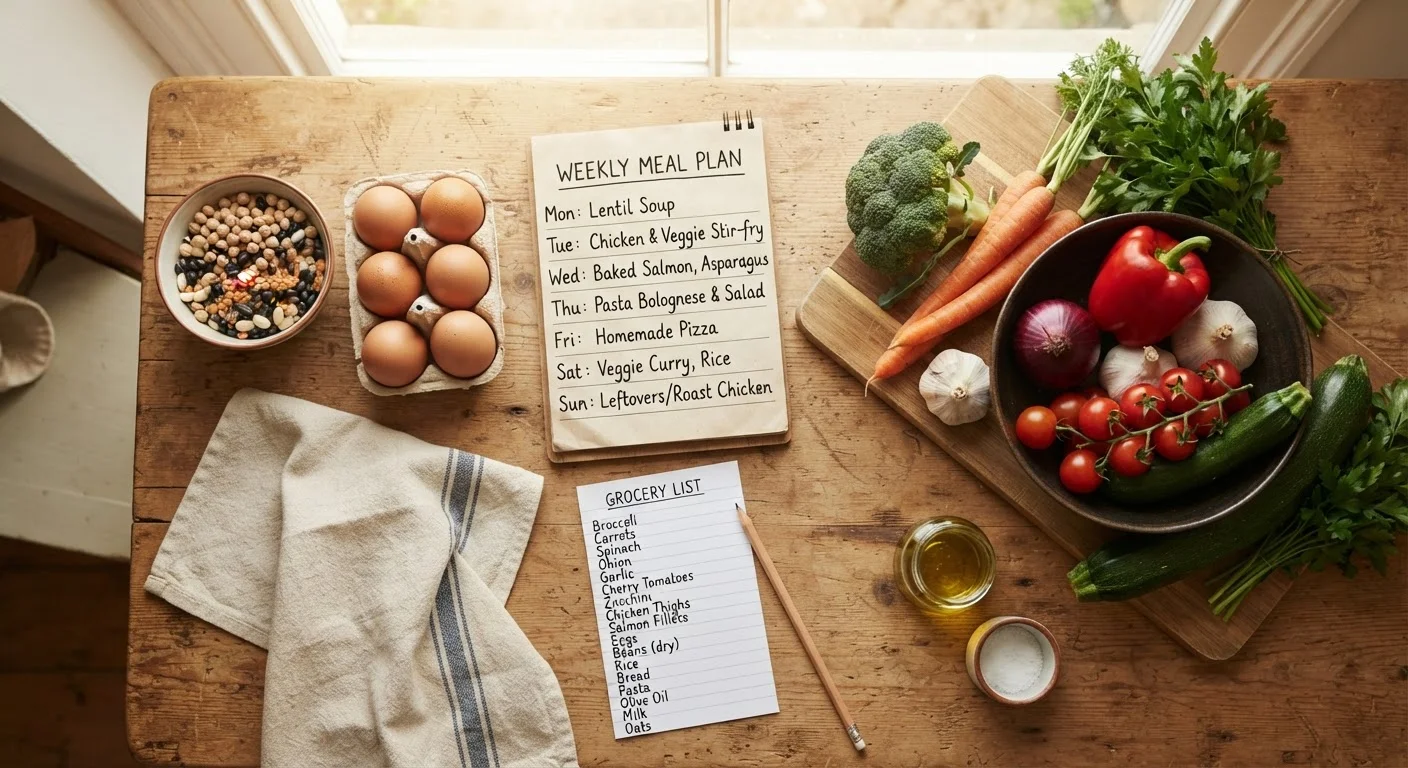
Write out the weekly meal plan and shopping list so nothing is left to memory.
Store weekly circular or app
Identify which proteins and produce are on sale before planning meals around them.
Freezer-safe containers
Store batch-cooked grains, soups, or proteins so nothing goes to waste mid-week.
Kitchen scale
Portion proteins accurately to avoid over-buying or under-buying for planned meals.
Building your week of meals, step by step
Audit your pantry, fridge, and freezer
Before writing any meals down, walk through what you already have. Note proteins in the freezer, grains and legumes in the pantry, and any produce that needs to be used soon. Meals built around what is already on hand cost almost nothing in incremental grocery dollars.
Check sales and seasonal produce
Look at your store's weekly circular before deciding on proteins and vegetables. If ground turkey is on sale, plan two meals around it. If zucchini is cheap and abundant, work it into three different dishes. Letting sales and season guide the plan consistently lowers the total bill.
Choose a protein anchor for the week
Pick one or two affordable proteins to anchor the week's dinners. Common budget-friendly options include eggs, canned fish, chicken thighs, dry or canned beans, and tofu. Plan to use each protein in at least two different meals to maximize the purchase. For example, a batch of cooked chicken thighs can become a grain bowl on Tuesday and a taco filling on Thursday.
Map out five to seven dinners
Write a dinner for each night of the week, noting which nights are busy (keep those simple, like a sheet-pan meal or a pot of soup) and which have more time for cooking. Aim for at least one batch-cooking night where a larger quantity feeds the family twice: once fresh and once as repurposed leftovers.
Plan lunches around dinner leftovers
Instead of buying separate lunch ingredients, plan lunches as intentional leftovers from the previous night's dinner or a batch of something like soup or grain salad made in quantity. This approach cuts the lunch grocery budget without requiring any extra cooking time.
Write a single, complete shopping list
Translate the week's meals into one shopping list organized by store section: produce, dairy, proteins, dry goods, canned goods. Cross-reference against your pantry audit from step one and remove anything you already have. Stick to the list in the store.
Once you have completed the steps above, you will have a shopping list with no guesswork, a clear sense of which nights are simple and which involve more prep, and a plan for using leftovers before they go bad. That last piece, using what you already bought, is where a lot of families recover real money. The cost and convenience comparison between dried and canned beans is worth a read if you are unsure which form fits your cooking routine, since beans appear in several budget meal archetypes.
For protein choices across the week, comparing protein sources by cost per gram helps identify where your grocery dollars go furthest. Eggs, legumes, canned fish, and tofu consistently deliver nutrition at lower cost than fresh meat, and rotating them into the weekly plan frees up budget for produce or dairy.
Making the habit stick week after week
The first week you try this framework will take the most time. By the third or fourth week, the process shortens considerably because you have a working list of meals your family likes, you know your pantry baseline, and the shopping list almost writes itself.
Keep a running note (paper or phone) of meals that worked well. Rotate them. Do not feel obligated to plan something new every week. Repetition is not boring when the food is good, and it is far easier on the budget when you already know the exact ingredient quantities a meal needs.
Whole grains like oats, brown rice, barley, and whole-wheat pasta add nutritional value and volume to meals at low cost. Keeping one or two on hand broadens the range of meals you can build from the same pantry.
Budget meal planning also connects to the broader picture of household finances. If consistent food savings free up room in your monthly spending, building a savings habit even on a constrained budget is a natural next step. The goal is not perfection each week but a system that is easy enough to repeat without burnout.
Food safety comes before budget savings
Stretching groceries further is smart, but not at the cost of food safety. Follow USDA guidelines for safe storage times for cooked proteins and leftovers: most cooked foods should be refrigerated within two hours and consumed within three to four days. When in doubt, throw it out. Foodborne illness costs far more in health and disruption than any saved ingredient is worth.