

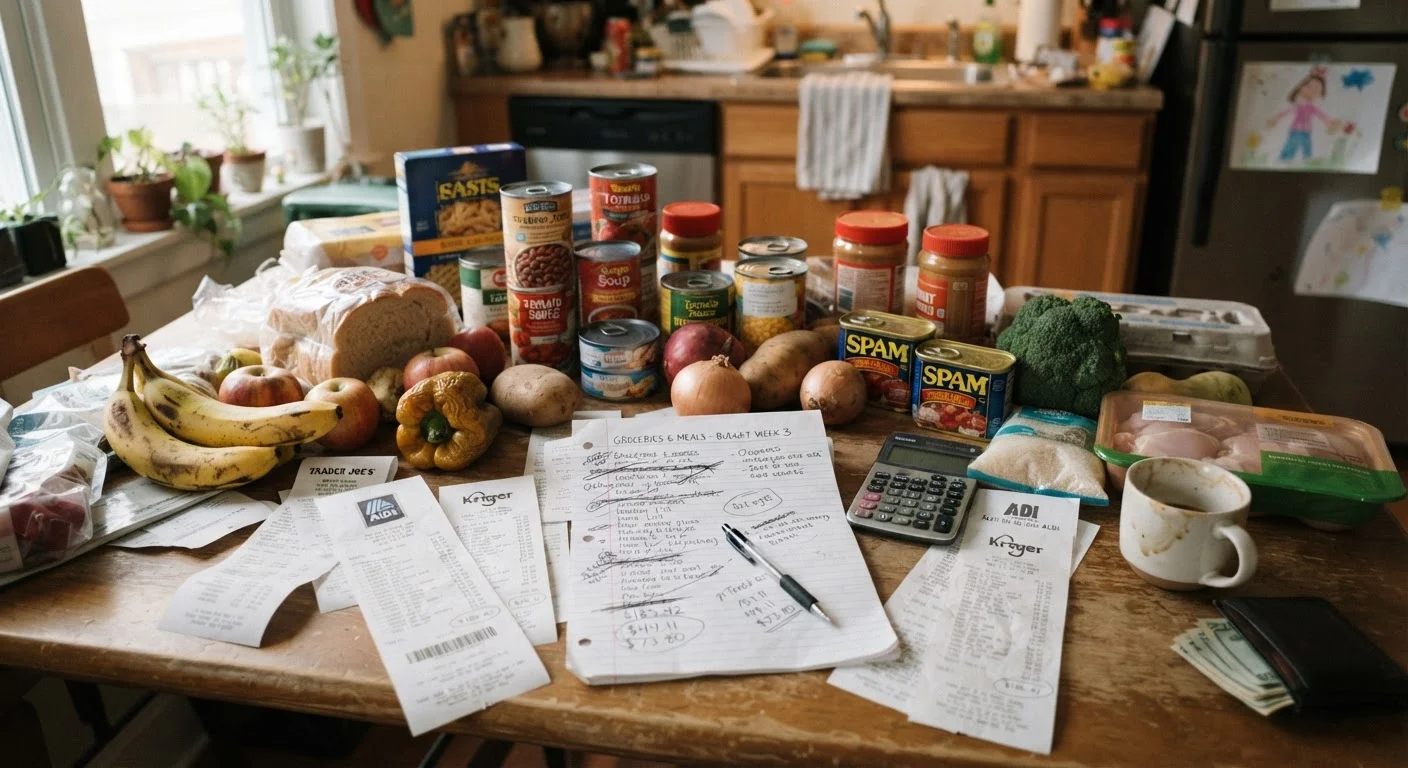
Key Takeaways
- Shopping without a meal plan is the single fastest way to overspend on groceries.
- Buying in bulk only saves money when your family will actually use the full quantity before spoilage.
- Ignoring unit prices means you often pay more for a larger package than a smaller one.
- Skipping pantry staples in favor of convenience items quietly inflates weekly food costs.
- A written list tied to actual meals prevents impulse purchases and repeat trips to the store.
Why small planning gaps cost more than families expect
Most families do not overspend on groceries because of one big decision. The cost accumulates in small gaps: a week with no meal plan, a bulk buy that spoils, a specialty ingredient purchased for one recipe and never used again. These patterns are common, and they are fixable once you can see them clearly.
Budget overruns at the grocery store are often treated as a willpower problem, but they are almost always a systems problem. The fix is structural, not motivational. Understanding where the plan breaks down is the first step toward spending less without eating worse. The same logic applies across household budgets generally; deferred decisions in home maintenance follow a similar pattern of small gaps becoming expensive over time.
Shopping without a written meal plan for the week.
Why it happens: Families often assume they know what they need, or they plan loosely in their heads without committing meals to paper or a notes app.
Ignoring unit prices and comparing only package prices.
Why it happens: The sticker price on a bigger package feels like the better deal, but the cost per ounce or per unit can tell a different story.
Buying convenience and pre-cut items as the default, not the exception.
Why it happens: Pre-washed salad kits, pre-shredded cheese, and marinated proteins save prep time, but that convenience is priced in, often at two to three times the cost of the whole ingredient.
Failing to account for what is already in the pantry and freezer.
Why it happens: Without a quick inventory before planning, families buy duplicates of items they already have and miss opportunities to build meals from existing stock.
Treating the grocery store as the only place to compare prices.
Why it happens: Families stick to one store out of habit, assuming it is competitive across all categories, without checking whether staples are cheaper elsewhere.
Planning meals that require too many specialty ingredients.
Why it happens: Recipe-browsing encourages trying new dishes, but many recipes call for ingredients used in small quantities that then sit unused and eventually spoil.
How to build habits that actually hold
Correcting these mistakes does not require an elaborate system. Most families need only two consistent habits: a short weekly planning session and a list built from that plan. The planning session does not need to cover every meal; covering dinners and one or two lunches is usually enough to keep the week on track.
Food waste is a hidden budget leak
The USDA estimates that American households waste a significant share of the food they buy, often because meals were not planned around what was already on hand. Produce bought with vague intentions and proteins thawed without a plan are two of the most common sources of this waste. Reducing waste is not just an environmental concern; it is one of the most direct ways to lower your weekly grocery spend.
If your household is newer to structured meal planning, the trade-offs around organic buying is worth reading alongside this, since ingredient choices interact directly with budget planning. For a broader budget framework that covers food alongside other household spending, common household budgeting methods offer a useful starting point.
This article is for general informational purposes only and does not constitute financial or dietary advice. Individual household needs vary; consult a qualified nutrition or financial professional for guidance specific to your situation.