

Key Takeaways
- In-season produce costs less because regional supply is high and shipping distances are shorter.
- A produce calendar maps which fruits and vegetables are in season each month in your region.
- Seasonal shopping pairs well with batch cooking and simple preservation methods like freezing.
- Out-of-season produce is often imported or grown in energy-intensive greenhouses, raising the price.
- Frozen vegetables are a reliable, affordable alternative when fresh seasonal options are limited.
Seasonal eating
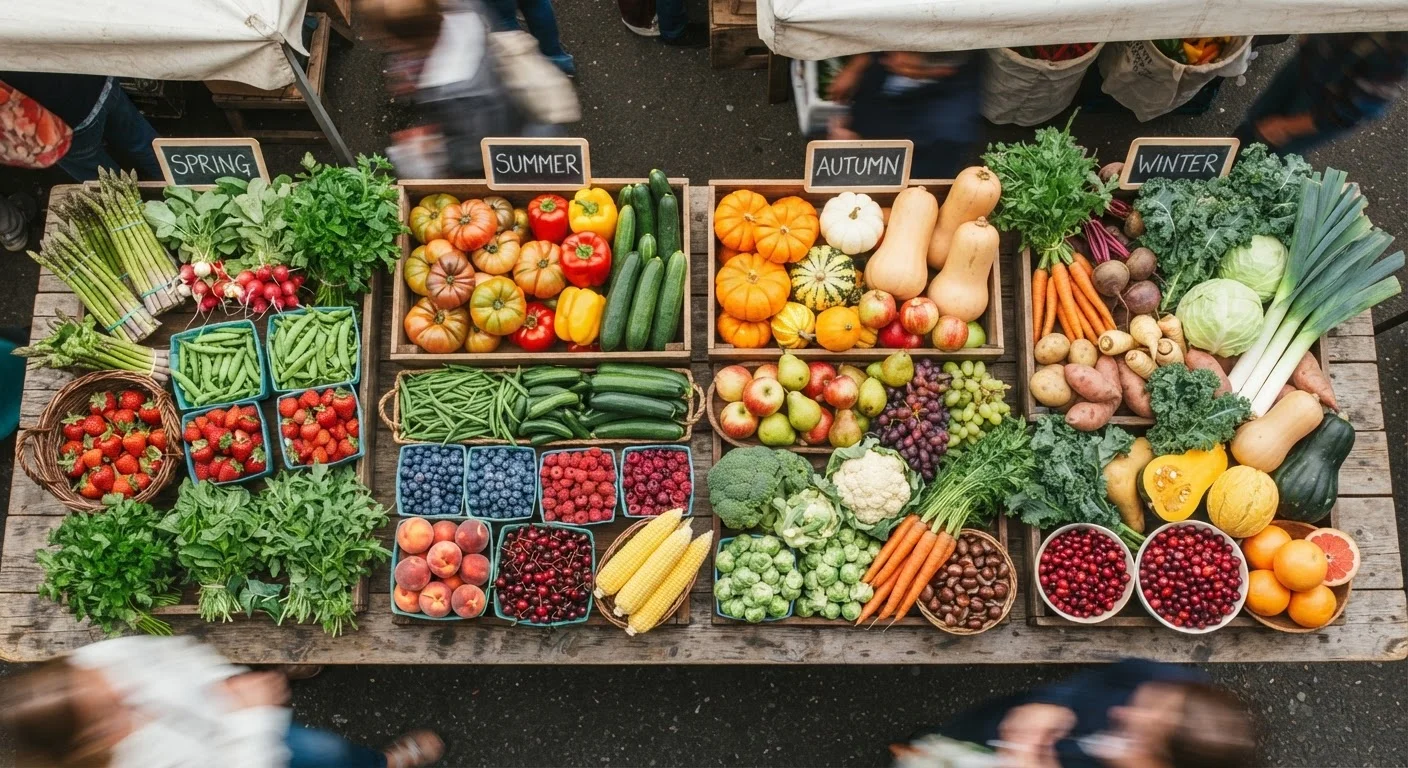
Seasonal eating means choosing fruits and vegetables during the weeks or months when they naturally ripen in your region. At that point, supply is high, transportation costs are low, and retail prices typically drop. Produce also tends to reach stores faster, which can mean better flavor and nutrient content.
Nutrient degradation in produce is time- and temperature-dependent; shorter supply chains associated with in-season local produce generally reduce post-harvest losses of heat-sensitive vitamins such as vitamin C and folate.
Why season changes what you pay at the register
Produce pricing follows a straightforward supply pattern. When a crop is at peak harvest in a nearby growing region, stores receive large quantities at lower shipping and storage costs. That surplus is passed along as lower shelf prices. When the same crop is out of season domestically, retailers source it from distant states, Mexico, or South America, and those logistics costs appear in your receipt.
A pound of domestic tomatoes in August can cost a fraction of what the same tomatoes cost in February, when they are greenhouse-grown or shipped thousands of miles. The same logic applies to strawberries, sweet corn, butternut squash, and dozens of other staples. Knowing which crops are in season in your part of the country is the foundation of produce-based budget planning.
Start with one seasonal swap per week
Pick one vegetable or fruit that is in season in your region and substitute it for the equivalent item you normally buy. Over several weeks, this habit builds familiarity with seasonal options without requiring a full overhaul of your meal plan. Even a single swap on a frequently purchased item can add up across a month of grocery runs.
This is not about eating perfectly or avoiding all out-of-season produce. Even shifting two or three weekly purchases to in-season items can reduce grocery spending meaningfully over a month.
How to use a produce calendar
A produce calendar is a month-by-month reference showing which fruits and vegetables are in peak season in a given region. The US has distinct growing zones, so a calendar for the Pacific Northwest differs from one for the Southeast or the Great Plains. State cooperative extension programs, run through land-grant universities, publish region-specific calendars at no cost.
To put a calendar to work, scan the current month's column before writing your grocery list. Build meals around what is listed there rather than starting with a recipe and then shopping for ingredients regardless of cost. This small change in sequence, calendar first, recipe second, tends to lower the total bill.
For families doing weekly meal planning, pairing a produce calendar with a structured dinner framework helps avoid both overspending and food waste. See our week-by-week meal planning framework for a practical system that fits this approach.
Extending the value: freezing and batch cooking
When a seasonal item is at its lowest price, buying a larger quantity and preserving it extends the savings beyond the harvest window. Blanching and freezing vegetables like green beans, corn, or spinach at home is straightforward and requires no special equipment beyond a pot and freezer bags. The nutritional profile of home-frozen vegetables is comparable to commercially frozen options.
Commercially frozen vegetables are also a reliable budget tool when fresh seasonal produce is not available or accessible. Frozen vegetables are nutritionally comparable to fresh in most cases, because the freezing process happens close to harvest. Keeping a well-stocked freezer of frozen vegetables reduces dependence on expensive out-of-season fresh items.
Batch cooking with seasonal produce fits naturally into broader meal strategies. A large pot of seasonal vegetable soup, a sheet pan of roasted root vegetables, or a simple grain bowl built around whatever is cheapest that week can serve multiple meals. Our guide on building a week of family dinners from a single protein shows how this kind of flexible planning reduces both cost and waste.
Common planning gaps that work against seasonal savings
Seasonal eating saves money only when it is integrated into how a family actually shops. Several common habits undercut the potential savings. Buying produce without a list leads to selecting whatever looks appealing at the moment, which is often an imported or greenhouse item prominently displayed at full price. Shopping without checking what is in season first means missing the lower-priced options that may be stacked nearby in plain sight.
Another gap is purchasing more fresh produce than the household can use before it spoils. Waste erases savings quickly. Buying smaller quantities of perishable items and supplementing with frozen versions when needed is a more reliable approach than loading up on fresh produce that may not get used. For a fuller look at the planning errors that inflate grocery costs, see where budget meal planning often goes wrong.
Seasonal shopping also interacts with the organic versus conventional question. In-season conventional produce often costs less than out-of-season organic produce, and the trade-offs are worth understanding. Our article on the pros and cons of buying organic on a family budget covers that comparison in detail.
This article is for general informational purposes only and does not constitute medical or dietary advice. Consult a registered dietitian or qualified healthcare professional for guidance tailored to your family's specific nutritional needs.