

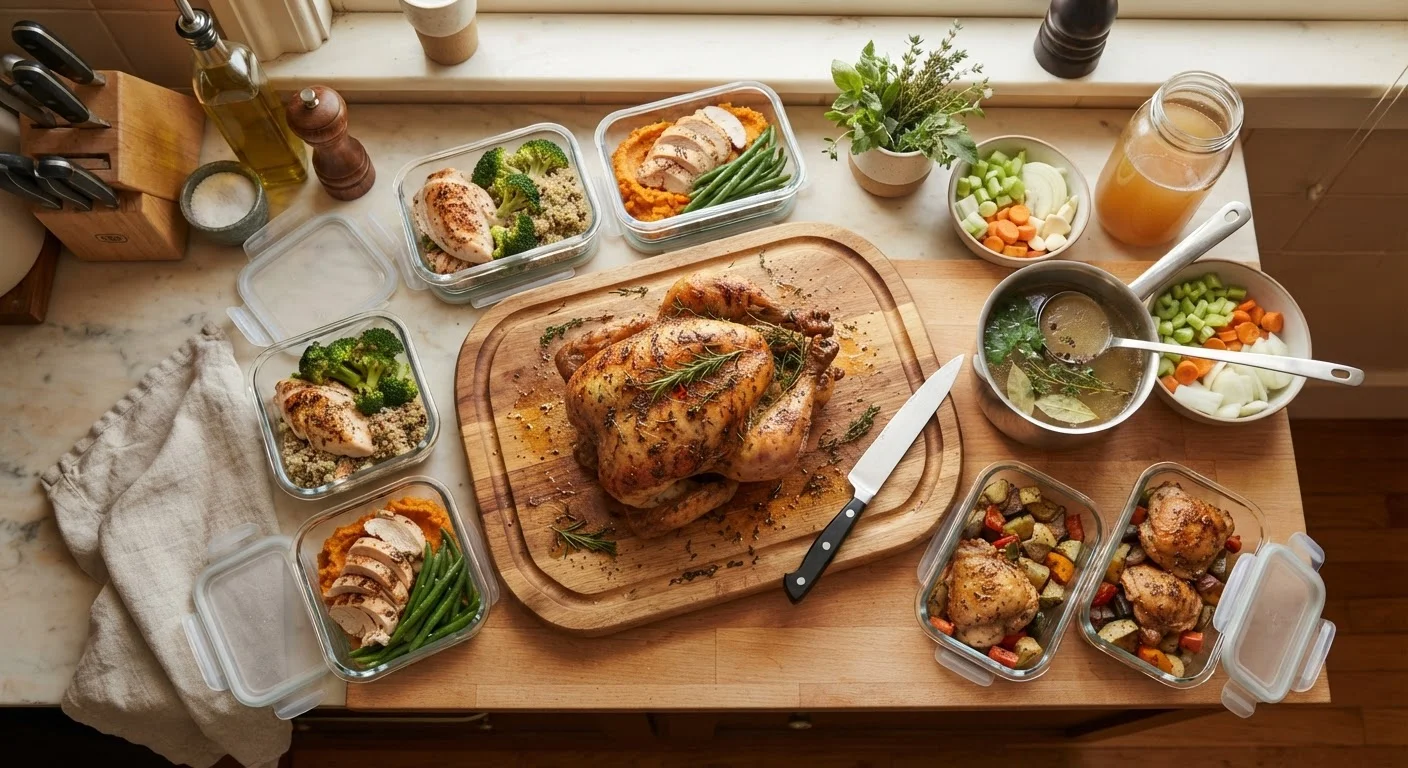
Key Takeaways
- A single rotisserie chicken can provide protein for four to five distinct family meals when broken down systematically.
- The carcass yields a nutritious broth that serves as a base for soups, grains, and sauces at no extra cost.
- Pairing chicken portions with affordable pantry staples stretches overall food dollars without sacrificing nutrition.
- Planning the highest-yield meals first prevents waste and ensures the whole bird gets used.
- Proper refrigeration and prompt use of leftovers keeps meals safe and quality high throughout the week.
What you will need
Why one chicken goes further than you think
A standard store rotisserie chicken weighs roughly 3 to 4 pounds and contains several distinct sections: two breasts, two thighs, two drumsticks, two wings, and the carcass. When pulled apart with a plan, that one bird can realistically deliver protein portions for a family of four across multiple nights. The key is treating each part as a separate ingredient rather than serving the whole chicken at once.
Beyond the meat, the carcass holds collagen, minerals, and flavor that make a genuinely useful homemade broth. That broth can cook rice, form the base of a soup, or add depth to a quick pan sauce. It replaces a purchased item you would otherwise need. For families watching grocery costs, this layered approach often makes a rotisserie chicken one of the most cost-effective protein sources per serving available at a typical US grocery store.
See our guide to pantry staples for the low-cost ingredients that pair best with each chicken-based meal below.
What you need before you start
Gathering a few basic tools and ingredients before breaking down the chicken will make the entire week run more smoothly.
What you will need
Kitchen shears
Cut through joints and cartilage when breaking the chicken into sections.
Large stockpot (6 quart or larger)
Hold the carcass and enough water to make a full batch of broth.
Fine-mesh strainer
Remove bones, skin, and solids from the finished broth cleanly.
Airtight storage containers
Keep separated chicken portions fresh in the refrigerator for up to four days.
Food thermometer
Confirm reheated chicken has reached a safe internal temperature of 165 degrees F.
Freezer-safe zip-lock bags
Store broth in flat, stackable portions and freeze any unused chicken before day four.
Step-by-step: turning one chicken into a week of dinners
Follow these steps in order. Steps 1 through 3 happen on the day you bring the chicken home; steps 4 through 6 happen across the rest of the week as you cook each meal.
Break down the chicken immediately
Within two hours of purchase, pull the chicken apart by hand or with kitchen shears. Separate the meat into three categories:
- Breast meat: larger pieces suitable for slicing into sandwiches, tacos, or grain bowls
- Thigh and drumstick meat: darker, moister meat that works well shredded into soups, stir-fries, or pasta sauces
- Wings: good for a quick snack meal or to add to broth for extra flavor
Store each category in its own sealed container in the refrigerator.
Make broth from the carcass
Place the carcass, including any skin you do not plan to eat, in a large pot. Add enough cold water to cover it by about two inches. Include aromatics if you have them: half an onion, a couple of garlic cloves, a carrot, a celery stalk, and a few peppercorns all improve the flavor without adding cost.
Bring the pot to a boil, then reduce to a low simmer. Simmer uncovered for 90 minutes to 2 hours. Strain through a fine-mesh strainer into a large bowl or container, discard the solids, and let the broth cool before refrigerating.
Plan which meal uses which part
Assign the meat categories to specific dinners before the week begins. A practical sequence might look like this:
- Night 1: Sliced breast meat in tacos or wraps with salsa, shredded cabbage, and beans
- Night 2: Shredded thigh meat in a noodle or rice soup using your homemade broth
- Night 3: Remaining breast or thigh meat tossed with pasta and a simple garlic and olive oil sauce
- Night 4: Shredded dark meat fried rice with eggs and frozen vegetables
Writing this list down or noting it on a phone prevents forgetting what is in the refrigerator and reduces the chance any meat goes to waste.
Cook the highest-moisture meals first
Breast meat dries out faster than dark meat in the refrigerator, so use it in the first one or two nights. Soups and sauces that include the broth also help keep shredded meat moist when reheated, making them good choices for nights two and three when the meat has been refrigerated for a day or two.
Use broth to cook grains
Replace water with your homemade chicken broth when cooking rice, farro, or quinoa. This adds flavor and a small amount of protein and minerals to what would otherwise be a plain starch. One cup of dried rice typically absorbs about two cups of liquid, so two cups of broth replaces purchased stock and stretches the broth's value further.
Freeze any unused meat before day four
If life gets in the way and you cannot finish all the planned meals by the end of day three, transfer any remaining chicken to freezer-safe bags before the four-day refrigerator limit. Label each bag with the date and the cut. Frozen cooked chicken keeps well for up to three months and can go directly from frozen into a soup or stew without thawing.
Nutrition and food safety through the week
Chicken meat stored in a sealed container in the refrigerator is generally safe to eat within three to four days, according to USDA food safety guidelines. Broth follows the same timeline. If you cannot use all the meat within that window, freeze individual portions in labeled bags before the four-day mark.
Each meal built from this plan contributes meaningful protein and, depending on the vegetables and grains you add, a range of B vitamins, iron, and fiber. Pairing chicken with legumes, whole grains, or a variety of vegetables makes each dinner more nutritionally complete than chicken alone. Seasonal produce is often the most affordable way to add vegetables to these meals throughout the year.
If anyone in your household has a condition that affects how they process protein, sodium, or certain nutrients, consult a registered dietitian before making significant changes to your family's regular diet. This article provides general food planning information, not personalized medical or dietary advice.
For a broader look at where budget meal planning can go wrong, see common meal planning mistakes families make each week.