

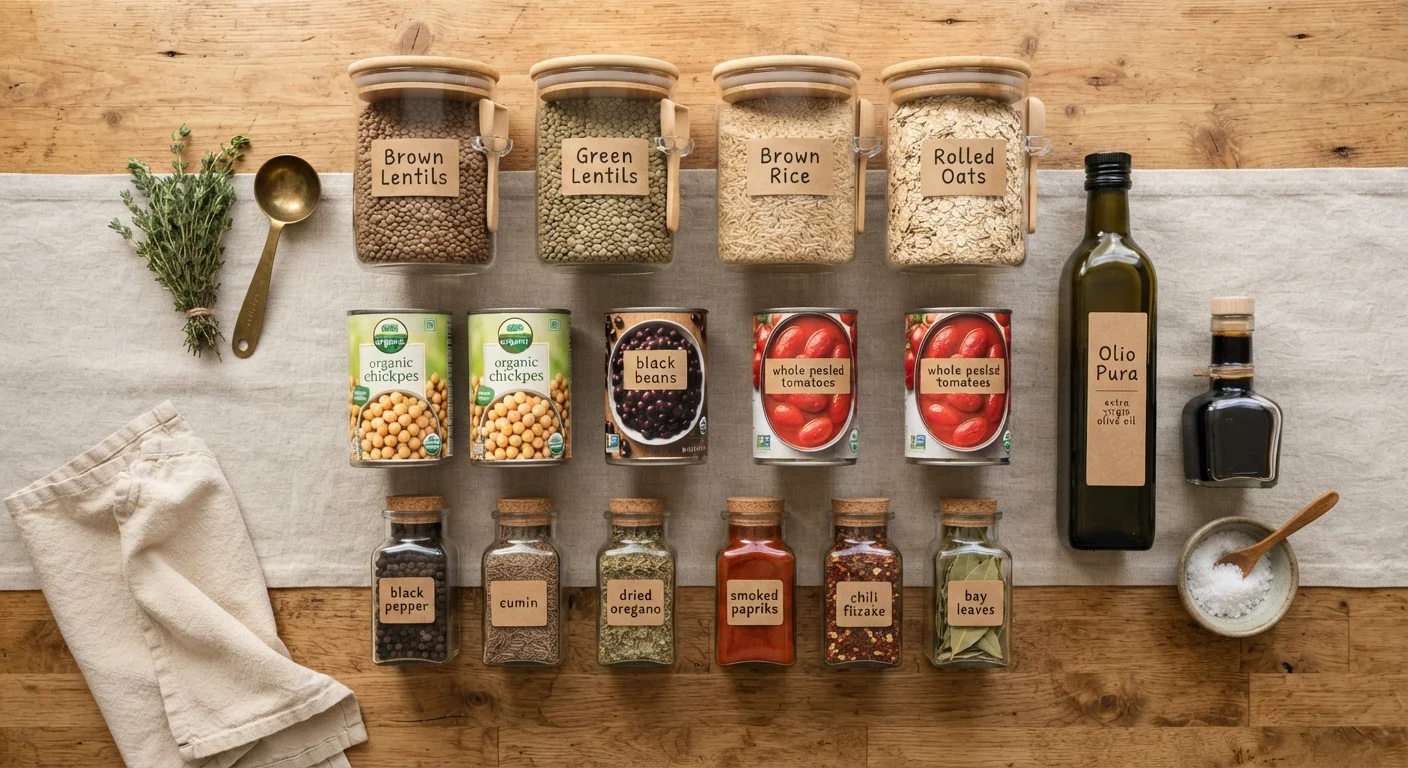
Why certain pantry items carry more nutritional weight
Not every shelf-stable ingredient earns its place. The staples worth keeping on hand share two traits: they deliver meaningful nutrition across multiple food groups, and they cost little per serving. Families that stock these items consistently tend to spend less on impulse purchases and waste less food, because a full pantry reduces the pressure to order out or buy expensive convenience items.
This article is general nutrition information and education, not medical advice. Consult a registered dietitian or healthcare provider for guidance specific to your family's health needs.
The categories below cover grains, legumes, canned goods, fats, and a few flavor-building pantry additions. Each group pulls nutritional weight in a different way, so the goal is balance across all of them rather than loading up on one.
Whole grains and starches
Brown rice, rolled oats, and whole-wheat pasta are the workhorses of budget cooking. Each provides complex carbohydrates, dietary fiber, and B vitamins at a cost well below most ready-made alternatives. Rolled oats double as breakfast and a binder in savory dishes. Brown rice stretches any protein or vegetable into a complete meal.
Dried pasta made from whole-grain flour costs only slightly more than refined versions at most stores and offers more fiber per serving. For a deeper look at why whole grains belong on every shopping list, see our guide to whole grains on a budget.
Cornmeal and barley are worth adding when the budget allows. Both are inexpensive and versatile, and barley in particular has a high fiber content that supports satiety.
Legumes and plant proteins
Dried lentils, chickpeas, black beans, and kidney beans are among the most cost-efficient protein sources available. Lentils require no soaking and cook in about 20 minutes, making them practical for weeknight meals. Canned beans cost a little more than dried but are still affordable and save time.
Legumes supply protein, iron, folate, and soluble fiber. Pairing them with a grain, such as rice and beans, produces a complete amino acid profile without any animal protein. For families weighing different protein options, our protein cost comparison guide breaks down the numbers across common sources.
Peanut butter, technically a legume product, belongs in this category too. It provides protein and healthy unsaturated fats at a low per-serving cost.
Canned and shelf-stable vegetables and fish
Canned tomatoes (whole, diced, or crushed) form the base of soups, stews, pasta sauces, and braises. They contain lycopene and vitamin C, and their nutritional content is well-preserved through the canning process. Canned pumpkin and sweet corn are similarly useful and inexpensive.
Canned fish, particularly tuna and salmon, provides omega-3 fatty acids and protein at a fraction of fresh fish prices. A single can of salmon contains a meaningful amount of calcium when the soft bones are included. For more on how frozen produce compares to fresh, see why frozen vegetables are nutritionally comparable to fresh.
Low-sodium versions of canned goods are worth choosing when available, as they give the cook more control over salt levels across a full meal.
Fats, acids, and flavor builders
A small amount of a good fat improves both flavor and the absorption of fat-soluble vitamins (A, D, E, and K). Olive oil and canola oil are the most practical pantry fats for everyday cooking. Both have favorable fatty acid profiles and relatively high smoke points for general use.
Apple cider vinegar, soy sauce, and dried spices (cumin, paprika, garlic powder, oregano, and chili flakes) cost very little but do significant work. They allow the same core ingredients to become different meals across a week, which is central to keeping meal planning sustainable. For a practical framework that puts all of these ingredients to work, see our meal planning framework for families on a tight budget.
Chicken or vegetable bouillon, whether cube or paste, is an inexpensive way to add depth to grains cooked in broth instead of water, and it extends the reach of a single protein purchase. Our guide to building a week of dinners from one chicken shows how broth made from bones fits directly into this strategy.
This article is for general informational and educational purposes only and does not constitute medical or dietary advice. Consult a qualified healthcare professional before making significant changes to your family's diet.