

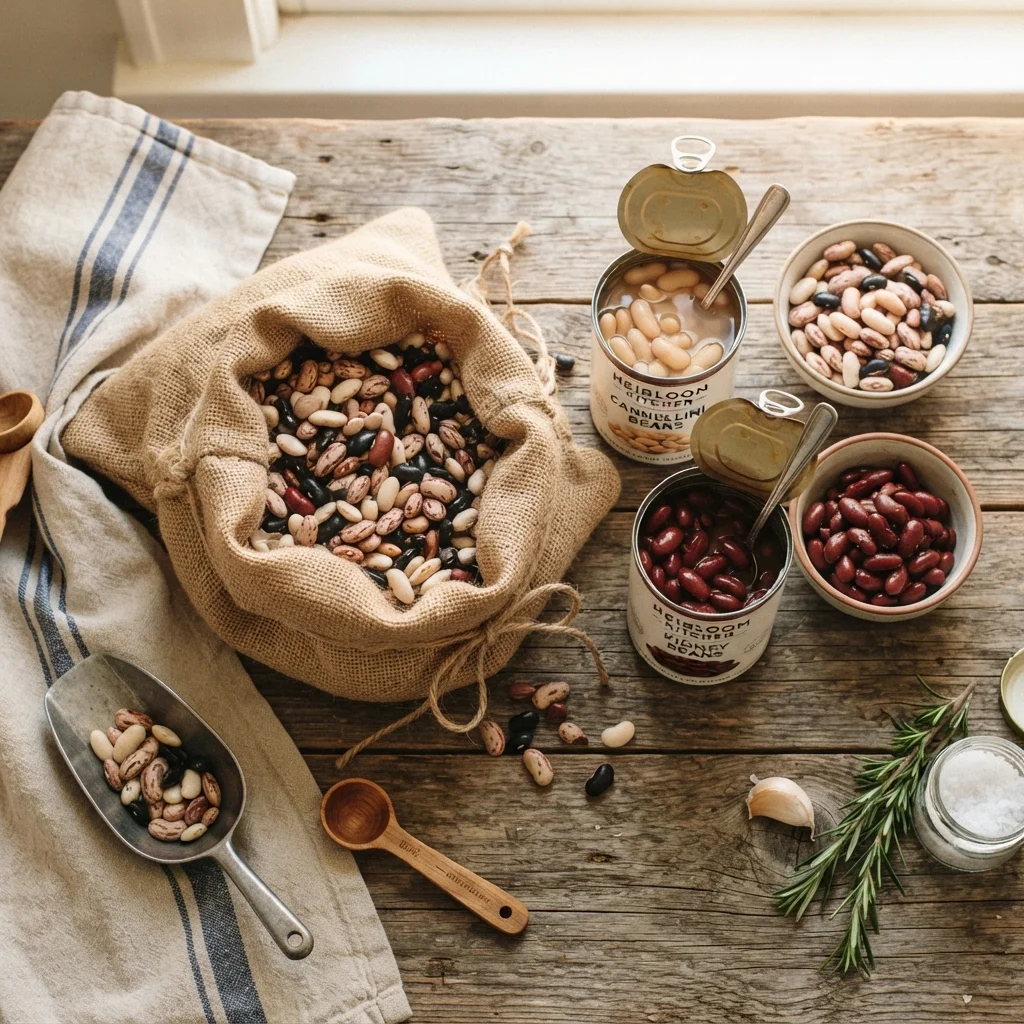
Key Takeaways
- Dried beans typically cost two to four times less per serving than canned beans.
- Both forms deliver comparable protein, fiber, and most micronutrients when prepared properly.
- Canned beans contain significantly more sodium; rinsing reduces it by roughly 40 percent.
- Dried beans require soaking and cooking time that can range from one to several hours.
- Families can use both forms strategically to balance cost savings with weeknight convenience.
Option A
Dried beans
The low-cost, high-yield pantry staple.
Best for: Families with time to plan meals ahead and wanting the lowest possible cost per serving.
Option B
Canned beans
The ready-to-use convenience option.
Best for: Households that need a fast, no-prep protein and fiber source on busy weeknights.
If your grocery budget is very tight and you can plan meals a day ahead
Dried beans
The per-serving cost is substantially lower, and a single bag feeds a family many times over, making it one of the most affordable protein sources available.
If weeknights are hectic and dinner needs to come together in 30 minutes
Canned beans
Canned beans require zero soaking or cooking time; opening a can and rinsing the contents takes under a minute, which matters when time is short.
If someone in your household is managing high blood pressure or watching sodium intake
Dried beans
Cooked dried beans contain very little sodium naturally, removing the need to rinse or monitor label sodium levels as carefully as with canned varieties.
If you want to stock a resilient pantry with long shelf-life foods
Dried beans
Stored in a sealed container in a cool, dry place, dried beans remain usable for one to two years, making them a dependable emergency and everyday pantry anchor.
If you cook beans only occasionally and do not want food waste
Canned beans
A single can provides a measured portion without the need to cook and store a large batch, reducing the risk of leftovers going unused.
The real cost difference per serving
A one-pound bag of dried beans typically yields around six cups of cooked beans, which translates to roughly twelve half-cup servings. At common US grocery prices, that works out to well under 20 cents per serving. A standard 15-ounce can of beans contains about 3.5 half-cup servings and generally costs between 80 cents and $1.50, putting the per-serving cost at roughly 25 to 45 cents, sometimes more depending on store and variety.
That gap compounds across a family that eats beans several times a week. Over a year, switching even two or three weekly meals from canned to dried beans can produce meaningful savings. For context on how these incremental choices add up, see our guide to everyday habits that accumulate into annual savings.
Dried beans do require an energy input for cooking, which adds a small cost. Stovetop simmering for one to two hours uses modest amounts of gas or electricity, but this does not come close to erasing the price advantage over canned. A pressure cooker shortens active cooking time considerably and may lower that energy cost further.
| Criterion | Dried beans | Canned beans |
|---|---|---|
| Approximate cost per serving | Under $0.20 | $0.25 to $0.45+ |
| Protein (per 1/2 cup cooked) | 7 to 8 grams | 7 to 8 grams |
| Sodium (per 1/2 cup) | Very low (no added salt) | 300 to 500 mg (before rinsing) |
| Prep and cook time | 1 to 14 hours (soak + simmer) | Under 5 minutes |
| Shelf life (sealed storage) | 1 to 2 years | 2 to 5 years (unopened can) |
| Batch cooking flexibility | High (cook large quantities) | Low (fixed can size) |
| Variety availability | Wide, especially in bulk | Wide, includes specialty types |
Nutrition: closer than you might expect
Both forms of beans are nutritionally strong. A half-cup serving of cooked beans (from either dried or canned) provides around 7 to 8 grams of protein, 6 to 8 grams of dietary fiber, and meaningful amounts of iron, folate, potassium, and magnesium. These numbers are broadly similar across preparation methods, because the bean itself retains its nutrient profile whether it was dried and rehydrated or processed in a can.
The clearest nutritional difference is sodium. Canned beans are typically processed with salt and can contain 300 to 500 milligrams of sodium per half-cup serving. Dried beans cooked without added salt contain very little. Research published in nutrition journals has found that draining and rinsing canned beans under cold water removes roughly 40 percent of added sodium, which is worth doing as a routine step. Families managing sodium for cardiovascular reasons should factor this in, and anyone with specific dietary concerns should consult a registered dietitian or physician rather than relying solely on general guidance.
For a broader look at how beans rank against other affordable proteins, our protein sources ranked by cost per gram covers eggs, legumes, canned fish, and more in one place.
~40%
Sodium removed by rinsing canned beans
Nutrition research has found draining and rinsing canned beans under cold water reduces sodium content by approximately 40 percent.
6 cups
Cooked yield from one pound of dried beans
One pound of dried beans rehydrates and cooks down to roughly six cups, or about twelve half-cup servings.
7-8g
Protein per half-cup serving (both forms)
Both dried (cooked) and canned beans deliver roughly the same protein per half-cup serving, making either a reliable plant protein source.
Cooking time and practical convenience
The main argument for canned beans is speed. There is no soaking, no long simmer, and no planning ahead. A can opens in seconds, the contents rinse in under a minute, and the beans are ready to add to soups, grain bowls, tacos, or salads immediately. For families cooking after school pickups and evening activities, that matters.
Dried beans demand more forethought. Most varieties benefit from an overnight soak (8 to 12 hours) followed by 45 minutes to 2 hours of simmering, depending on the variety. A quick-soak method (boil for 2 minutes, rest 1 hour, drain, then cook) cuts some of that time but still requires attention. Cooking a large batch on a weekend and refrigerating or freezing portions is the practical workaround most budget-conscious households use. Cooked beans keep well in the refrigerator for about five days and freeze for up to three months.
An Instant Pot or similar electric pressure cooker changes the calculus: unsoaked dried beans can cook in 25 to 40 minutes under pressure. Families who already own one of these appliances often find dried beans far more practical than stovetop cooking suggests.
Beans of either form fit well into a broader meal planning approach. Our week-by-week family meal planning framework shows how to build bean-based meals into a weekly rotation without overcomplicating the process.
How to use both forms together
The sharpest savings come from treating dried and canned beans as tools for different situations rather than an either-or choice. Cook a large pot of dried beans on Sunday, portion them into containers, and use them through the week as you would canned. Keep a few cans in the pantry for nights when the batch runs out or time is short.
This hybrid approach also applies to variety. Dried beans are widely available in bulk for common types like pinto, black, and navy. Less common varieties sometimes appear only canned, making canned beans the practical choice for specific recipes. Beans of both forms fit naturally into the pantry staples that anchor affordable, balanced family meals, alongside whole grains, canned tomatoes, and frozen vegetables.
Speaking of frozen produce: families stretching a food budget often combine beans with frozen vegetables for a complete, nutritious meal at very low cost. Our article on why frozen vegetables are nutritionally comparable to fresh covers what the science says about that trade-off.
This article provides general nutrition information for educational purposes and is not a substitute for advice from a qualified healthcare professional or registered dietitian. Individuals with specific health conditions should seek personalized guidance.