

Key Takeaways
- Watering at the root zone rather than overhead cuts water use and reduces disease risk.
- Mulch applied around plants can reduce watering frequency by slowing soil moisture loss.
- Drip systems and soaker hoses suit most home gardens better than sprinklers for water efficiency.
- Watering in the early morning gives plants what they need before heat evaporates surface moisture.
- Grouping plants by water needs makes irrigation schedules simpler and less wasteful.
Why irrigation method matters more than volume
Many gardeners assume dry plants just need more water. Often the problem is not how much water goes in, but where and when it lands. Water delivered overhead on a hot afternoon can evaporate before it reaches roots, while runoff from a sprinkler on compacted soil carries water off the bed entirely.
Outdoor water use can account for a significant share of a household's total water bill during warm months, particularly in drier regions. Getting irrigation right is therefore a practical money question as well as a gardening one. The small adjustments that build real annual savings are not limited to indoor habits.
The three core variables are: delivery method (how water reaches plants), timing (when you water), and frequency (how often). Each interacts with your soil type, plant selection, and local climate. Understanding those interactions is what separates efficient watering from guesswork.
Matching delivery method to your garden type
Sprinkler systems cover large areas quickly, making them practical for lawns and dense groundcovers. For vegetable beds, mixed borders, and container plants, they tend to wet foliage more than soil, which can encourage fungal issues and wastes water to evaporation. If you use sprinklers on lawn areas, common lawn watering myths are worth reviewing before you set a schedule.
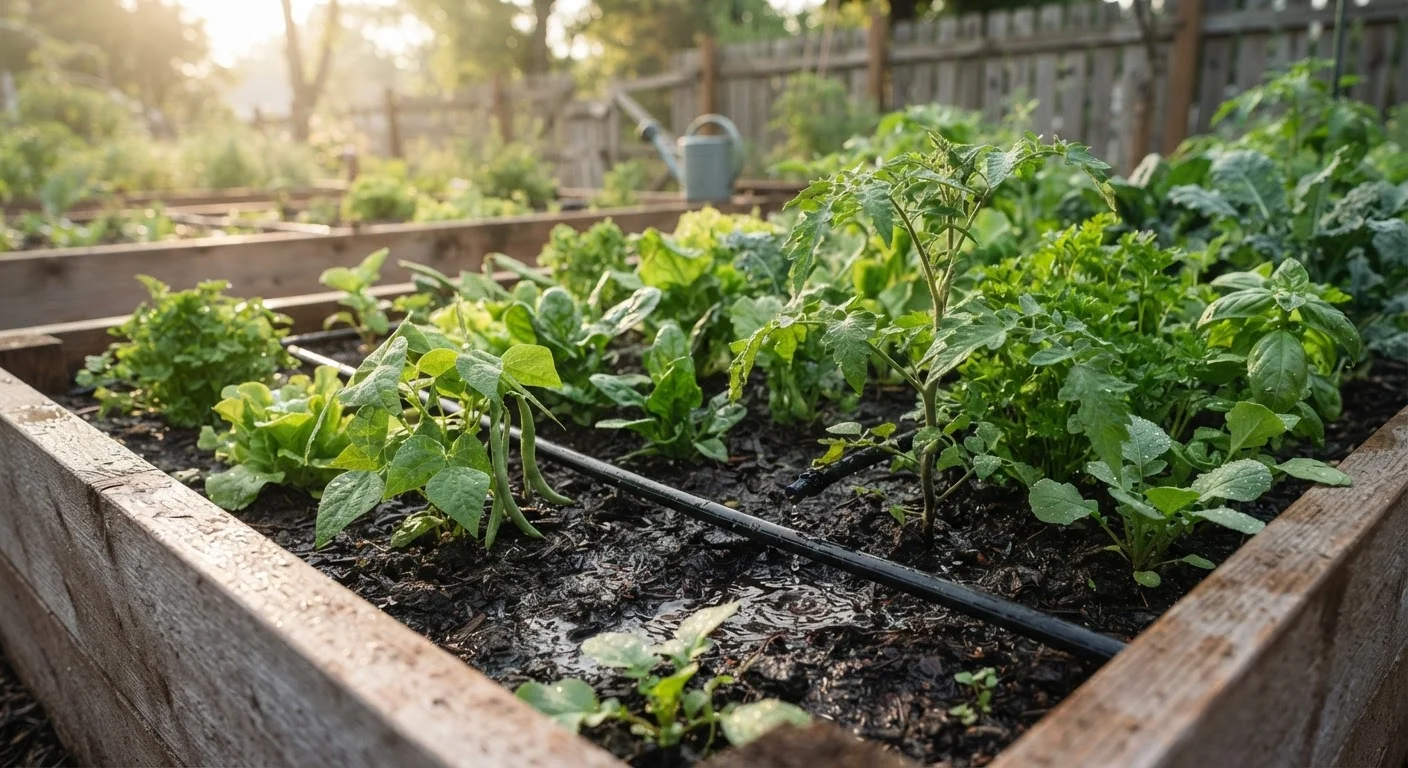
Drip irrigation runs low-pressure tubing along the soil surface with emitters spaced near individual plants. Water goes directly into the root zone with minimal evaporation. Systems can be expanded over time and are compatible with most raised bed or in-ground layouts. If you are weighing those two setups, a direct comparison of raised beds and in-ground planting covers relevant trade-offs.
Soaker hoses are a simpler, lower-cost alternative to drip tubing. They release water slowly along their full length, which works well for row crops and dense plantings but gives less control over individual plant placement. Both drip and soaker options outperform overhead watering in beds where soil quality matters, which connects directly to why soil condition affects garden performance so consistently.
Hand watering with a wand remains the most flexible method for container gardens, where soil dries faster and needs vary plant by plant. See container garden watering considerations for specifics on pots and patio setups.
Timing, frequency, and soil behavior
Early morning is the most efficient time to water. Temperatures are low, wind is usually calm, and foliage dries before evening, which limits disease. Watering in the evening leaves foliage wet overnight. Midday watering loses a larger fraction to evaporation.
Frequency depends on soil type as much as temperature. Sandy soils drain fast and need more frequent, lighter watering. Clay soils hold moisture longer but can become waterlogged if watered too often. Loamy or well-amended soil sits between those extremes and is most forgiving. If you notice poor water penetration or runoff, check whether compaction or soil composition is the cause.
A general principle used by many gardeners is to water deeply but less often, encouraging roots to grow down rather than stay near the surface. Shallow roots make plants more vulnerable during dry spells. Checking soil moisture at two to three inches deep before watering gives a reliable guide, regardless of what the schedule says.
Mulch and plant grouping as irrigation supports
Organic mulch, such as wood chips, straw, or shredded leaves, applied two to three inches deep around plants, slows evaporation from the soil surface. This can meaningfully reduce how often beds need water during dry stretches. Mulch also moderates soil temperature and, as it breaks down, improves soil structure. A comparison of mulch, gravel, and ground cover options can help you choose what fits your yard.
Grouping plants by water demand simplifies everything. Grouping plants with similar needs together means one irrigation zone can serve all of them without over or under-watering any individual plant. This principle applies to perennials as much as annuals. Low-water perennials planted together can largely sustain themselves through established root systems once settled, reducing irrigation needs season after season.
Water collected from downspouts in rain barrels can supplement irrigation during dry periods without adding to water costs. Local rules on rainwater collection vary, so check your municipal guidelines before installing a collection system.