

Key Takeaways
- Container size and drainage quality matter more than the number of pots you own.
- A quality potting mix designed for containers outperforms garden soil in pots every time.
- Grouping plants with similar water and light needs simplifies care and reduces waste.
- Vertical space on a small patio can double your growing capacity without adding floor area.
- Herbs, compact vegetables, and annual flowers are reliable choices for container success.
What you will need
Why containers suit tight outdoor spaces
A patio with limited square footage does not limit what you can grow. Containers let you control soil quality, move plants to follow sunlight, and use vertical surfaces that would otherwise go unused. That flexibility matters more on a small patio than in a sprawling yard, where poor placement can be corrected by simply replanting nearby.
Container gardening also lowers the barrier to starting. There is no ground to break, no tilling, and no need to amend an entire bed before your first season. You can begin with two or three pots, learn what works in your specific conditions, and scale from there. For families watching a budget, this trial-and-error approach carries far less financial risk than installing raised beds or putting in permanent planting areas. If you are weighing those alternatives, our comparison of raised beds and in-ground planting covers the trade-offs in detail.
What you need before you start
Gather your materials before buying a single plant. The choices you make on containers, soil, and drainage will affect every season you garden in this space.
What you will need
Containers (various sizes)
Hold your plants and growing medium; size determines root depth and moisture retention.
High-quality potting mix
Provides the aeration, drainage, and nutrients container plants need; garden soil compacts and should not be used.
Drainage saucers
Catch excess water below pots to protect patio surfaces and prevent staining.
Slow-release granular fertilizer
Supplements nutrients that wash out of potting mix over a season without weekly feeding chores.
Trowel
Moves soil into containers and helps with transplanting seedlings without damaging roots.
Vertical plant stand or wall-mounted planter
Extends growing capacity upward when floor space is limited.
Watering can or drip line
Delivers water directly to the soil, reducing evaporation and fungal issues on leaves.
Step-by-step: setting up your patio container garden
Follow these steps in order. Skipping the soil and drainage setup is the most common reason container gardens underperform, and it is a harder problem to fix once plants are in place. For more on reading soil signals and correcting them, see our guide on why vegetable gardens underperform.
Assess your sunlight and map your space
Observe your patio at different times of day over a full day before placing anything. Mark which areas receive direct sun for 6 or more hours and which stay shaded. Most vegetables and herbs need full sun; flowers and leafy greens can manage with less. Knowing your light map prevents the common mistake of buying sun-loving tomatoes for a north-facing patio.
Choose containers sized to your plants
Match container volume to the root system of what you plan to grow. Herbs like basil and parsley do well in 6- to 8-inch pots. Compact pepper or tomato varieties need at least a 5-gallon container, and indeterminate tomato varieties perform better in 10 to 15 gallons or more. Undersized containers restrict root growth, which limits the yield and makes watering harder to manage.
- Shallow bowls (6 to 8 inches deep): lettuce, radishes, chives, herbs
- Medium pots (10 to 12 inches): peppers, eggplant, bush beans
- Large containers (15 gallons and up): tomatoes, cucumbers, zucchini
Fill containers with a quality potting mix
Do not use soil dug from the yard. Garden soil compacts inside pots, cutting off the air circulation roots need. A potting mix formulated for containers stays loose and drains well. For vegetables, a mix that includes compost adds slow-release nutrition. Fill each container to about 1 to 2 inches below the rim to leave room for watering without overflow.
Plant at the right depth and spacing
Follow the spacing guidance on seed packets or plant tags. Crowding plants into a container to fit more in is a common beginner mistake that results in poor airflow, increased disease risk, and smaller yields. Set transplants at the same depth they were growing in their nursery pots, with tomatoes as the main exception: bury them deeper to encourage additional root growth along the stem.
Use vertical space with stands and wall planters
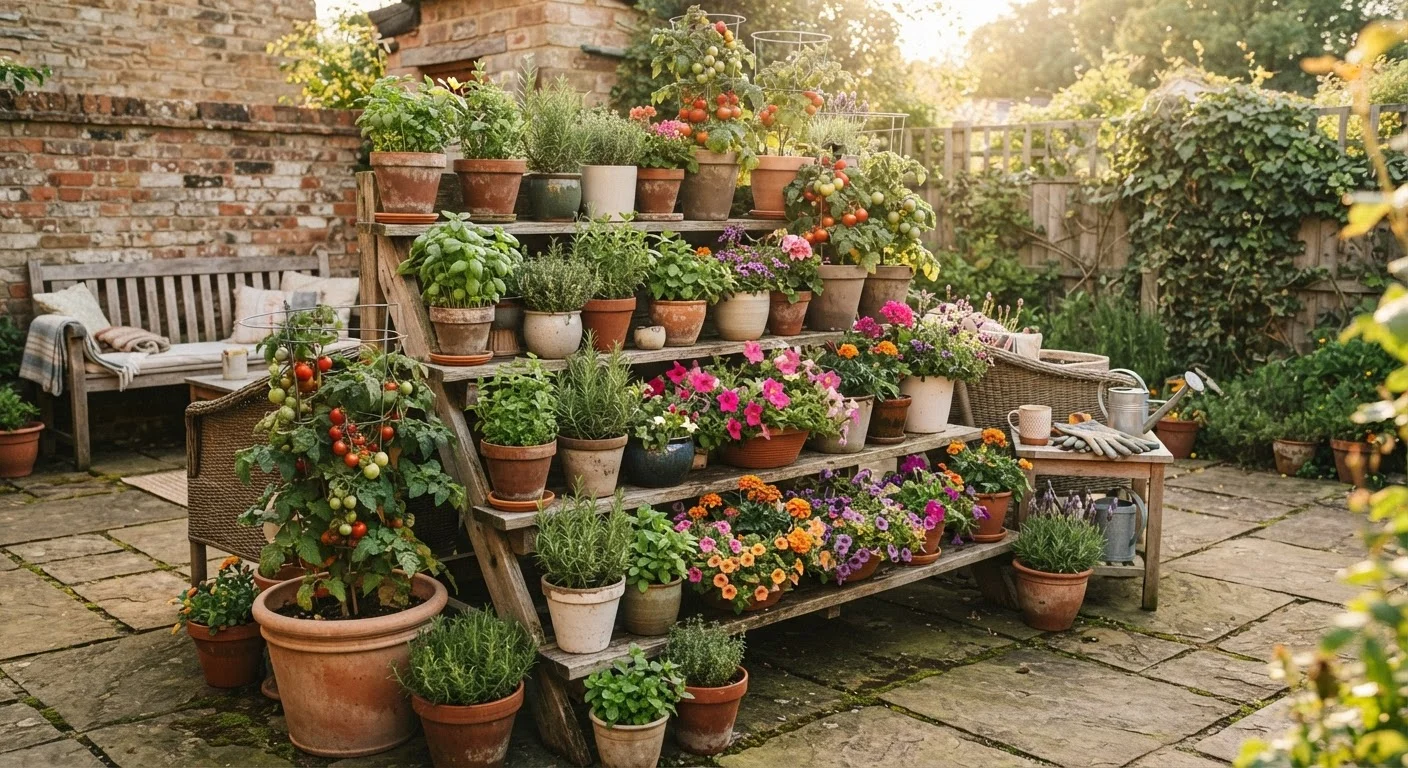
Floor space runs out quickly on a small patio. A tiered plant stand, a wall-mounted pocket planter, or a simple trellis leaning against a fence can double or triple your effective growing area. Trailing plants like strawberries or nasturtiums work well in elevated containers where they can hang downward. Climbing plants like pole beans or small-fruited cucumbers can grow upward on a trellis, using almost no floor area at all.
Fertilize regularly through the growing season
Potting mix loses nutrients faster than garden soil because frequent watering flushes them out. A slow-release granular fertilizer mixed into the soil at planting carries plants through the first several weeks. After that, a liquid fertilizer applied every two to three weeks during the active growing season keeps production consistent. Watch for yellowing leaves, which often signal a nitrogen shortage in containers.
Managing water on a small patio
Containers dry out faster than in-ground beds, especially unglazed terracotta or any pot sitting in direct sun. In warm months, small pots may need water every day. Larger containers with a volume of 15 gallons or more hold moisture longer and give you more margin for error.
Check soil moisture by pressing one finger about an inch into the mix. Water when it feels dry at that depth, not on a fixed schedule. Consistent overwatering causes root rot; consistent underwatering stunts growth and reduces yield. A basic drip irrigation setup can automate this for patios with several containers and reduce water use at the same time.
Group containers to reduce watering frequency
Clustering pots together slows moisture loss from individual containers because the group creates a slightly more humid microclimate around the plants. This is especially useful during dry summer stretches. It also makes watering faster since you move less between locations, and it allows trailing or taller plants to provide light shade for smaller, moisture-sensitive neighbors.
Plant pairings that work in limited space
Mixing plant types in one container is possible if their needs align. Basil and tomatoes share similar water and sun requirements and grow well together in a large pot. Trailing nasturtiums can fill the edges of a container occupied by a taller pepper plant. Herbs like parsley, chives, and cilantro coexist comfortably in a wide, shallow planter.
Avoid pairing plants with very different water needs, such as rosemary (which prefers dry conditions) with lettuce (which needs consistent moisture). That mismatch almost always results in one plant declining. If you want plants that return season after season without repotting, our article on perennials for family gardens covers varieties suited to container life.