

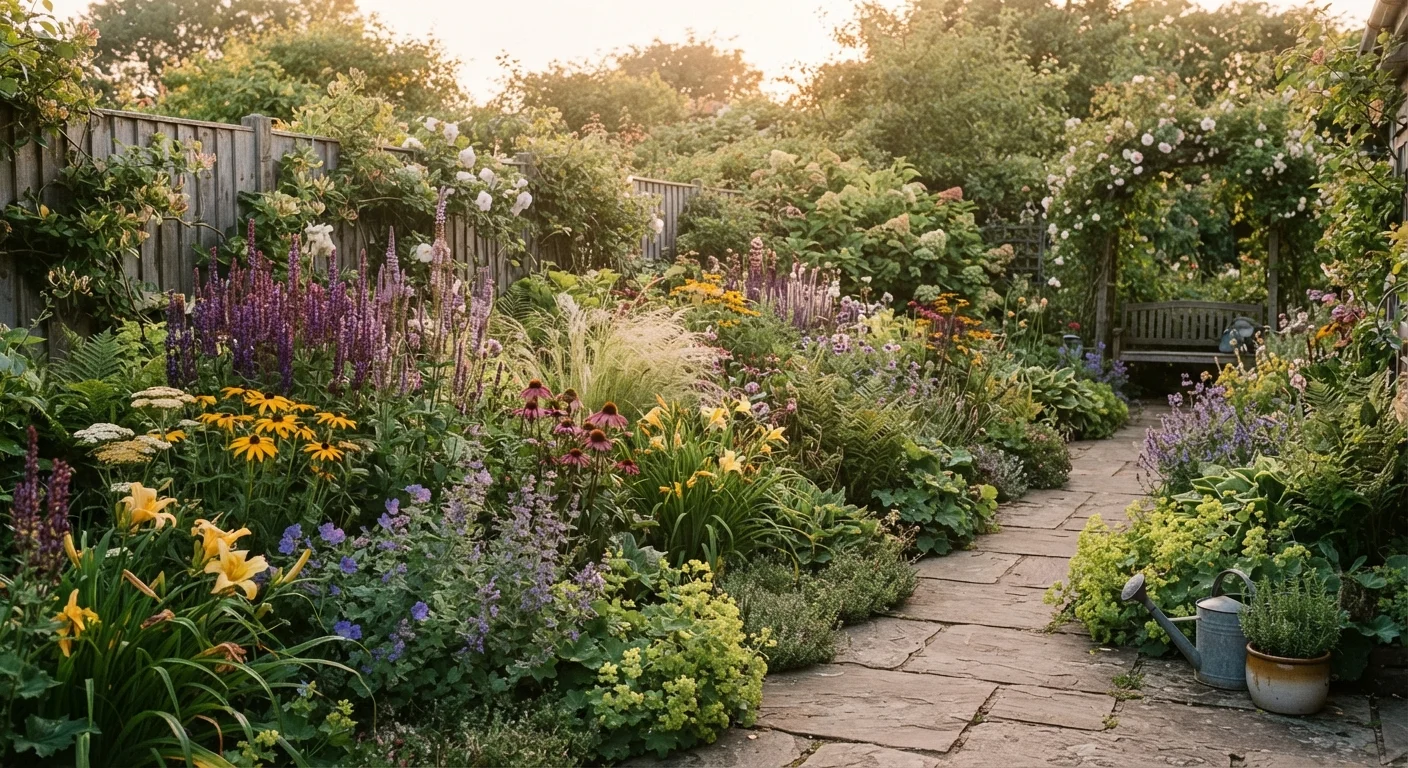
Key Takeaways
- Perennials cost more upfront than annuals but do not need replanting each year, reducing long-term costs.
- Many perennials spread naturally over time, filling gaps without extra purchases.
- Choosing varieties suited to your USDA hardiness zone cuts watering and maintenance significantly.
- Some perennials double as edible crops, giving families both colour and harvest value.
- Proper planting depth and soil preparation in year one drives performance in years two and beyond.
Why perennials make financial sense for families
Annual flowers and vegetables demand fresh seed or transplants every spring, and those costs add up. A perennial, by contrast, returns from its root system each year. Over three to five seasons, even a modestly priced perennial plant typically costs far less per year of colour or ground cover than replanting annuals in the same spot.
The savings compound when a perennial begins to spread or can be divided. Many common varieties, such as hostas, coneflowers, and ornamental grasses, can be split with a spade every two to three years, producing free divisions that fill other beds or can be shared with neighbours. That multiplication effect matters when a family is working to cover a larger yard on a limited budget.
Soil quality still matters, regardless of how tough a perennial is marketed to be. Before planting, check drainage and amend compacted or nutrient-poor areas. Signs your soil is holding back your plants apply to ornamental beds as much as to vegetable patches. If you are weighing whether to plant into the ground at all, see our comparison of raised beds and in-ground planting for a side-by-side look at each approach.
Coneflower (Echinacea)
Coneflower is one of the most reliable perennials for American family gardens. It tolerates heat, dry spells after establishment, and a wide range of soil types. The daisy-like blooms appear in midsummer and, if left standing, the seed heads feed birds through autumn and winter. Plants self-seed moderately, which means the colony slowly expands without any effort. Coneflower grows well in USDA zones 3 through 9, making it viable in most of the continental United States.
Deadheading spent flowers extends the bloom period, but leaving the last flush of seed heads standing provides wildlife benefit and eliminates cleanup labour before winter.
Coneflower self-seeds and feeds birds, making it one of the lowest-effort perennials available.
Daylily (Hemerocallis)
Daylilies tolerate poor soil, intermittent drought, and partial shade, conditions that defeat many other flowering plants. Individual blooms last only one day, but a single clump produces dozens of buds over a two to four week window. The foliage stays attractive through the growing season, acting as informal ground cover between bloom cycles. Daylilies multiply steadily, and clumps can be divided every three to four years to fill other spots at no extra cost.
Most varieties are hardy in zones 3 through 9. Some are also edible; buds and flowers have a long history of culinary use in certain food traditions, though you should confirm identification before consuming any plant material.
A single daylily clump can be divided every few years, multiplying your stock for free.
Hosta
Hostas are the standard choice for shaded areas where most flowering plants struggle. Their large, textured leaves fill ground space efficiently, reducing the bare soil that weeds colonise. They return reliably each spring in zones 3 through 9 and require almost no intervention once established, apart from slug control in wet climates. Hostas grow slowly in the first two years but accelerate after that, and mature clumps can be divided in early spring to produce multiple new plants.
Leaf colour ranges from deep green to blue-grey to gold and variegated forms, so hostas can add visual interest to shaded corners without the need for flowers. The foliage alone provides season-long ground cover value.
Hostas fill shaded ground efficiently and can be divided in spring to expand coverage at no cost.
Black-eyed Susan (Rudbeckia)
Black-eyed Susan produces bold yellow flowers from midsummer through early autumn, a period when many other perennials have already finished blooming. It grows readily in average to poor soil, resists deer browsing, and tolerates both heat and light frost. The plant self-seeds vigorously, sometimes to the point of needing selective thinning, which also provides free transplants for bare areas. It is hardy in zones 3 through 9.
The long bloom window makes it useful for keeping a border looking active through the back half of summer when families are most likely to be outdoors.
Black-eyed Susan blooms late in the season and self-seeds freely, giving you more plants each year.
Creeping phlox (Phlox subulata)
Creeping phlox covers bare ground quickly and produces a dense mat of small evergreen foliage topped with a flush of pink, white, or purple flowers in spring. It works particularly well on slopes, along path edges, and in spots where mowing is difficult. Once established, it needs little water or feeding and handles cold winters in zones 3 through 9. Because it spreads laterally rather than by seed, it is easier to manage than some self-seeding alternatives.
Dividing a mature mat every three to four years and replanting sections keeps it vigorous and provides material to extend coverage or fill other bare patches.
Creeping phlox covers difficult slopes and edges, cutting mowing time and weed pressure season after season.
Chives (Allium schoenoprasum)
Chives blur the line between ornamental and edible perennial. The purple pompom flowers appear in late spring and are attractive enough to earn a border spot alongside purely decorative plants. The hollow green leaves are edible and can be harvested regularly from spring through autumn. Chives return reliably from their bulb clusters each year in zones 3 through 9, ask for minimal maintenance, and self-seed if flowers are left to go to seed.
From a value standpoint, a single planting provides both visual appeal and a steady culinary harvest across multiple seasons without replanting costs.
Chives provide edible harvests and ornamental flowers from the same perennial planting for many seasons.
Getting the most from your perennial investment
The single biggest mistake families make with perennials is skipping the watering routine in the first growing season. Established perennials are often drought-tolerant, but roots need consistent moisture during the first 8 to 12 weeks after planting to settle in. After that initial period, most of the varieties listed here need far less attention. For a practical look at matching irrigation to plant needs without wasting water, see irrigation basics for home gardens.
Mulching around perennials after planting suppresses weeds, holds soil moisture, and moderates root temperature through winter. A 2 to 3 inch layer of shredded bark or wood chip mulch, kept clear of the plant crown, is generally sufficient. Comparing mulch, gravel, and living ground covers can help you decide which material suits your beds and climate. If your outdoor space is limited, several of the perennials below also perform well in large containers. Our guide to container gardening on a small patio covers soil mixes and container sizing for perennials in tight spaces.
Divide perennials to stretch your budget
Many perennials, including hostas, daylilies, and coneflowers, benefit from division every two to four years. In early spring, lift an established clump with a garden fork, split it into sections that each have roots and shoots, and replant immediately at the same depth. This keeps plants healthy and gives you free stock to expand beds or fill gaps without purchasing new plants.