

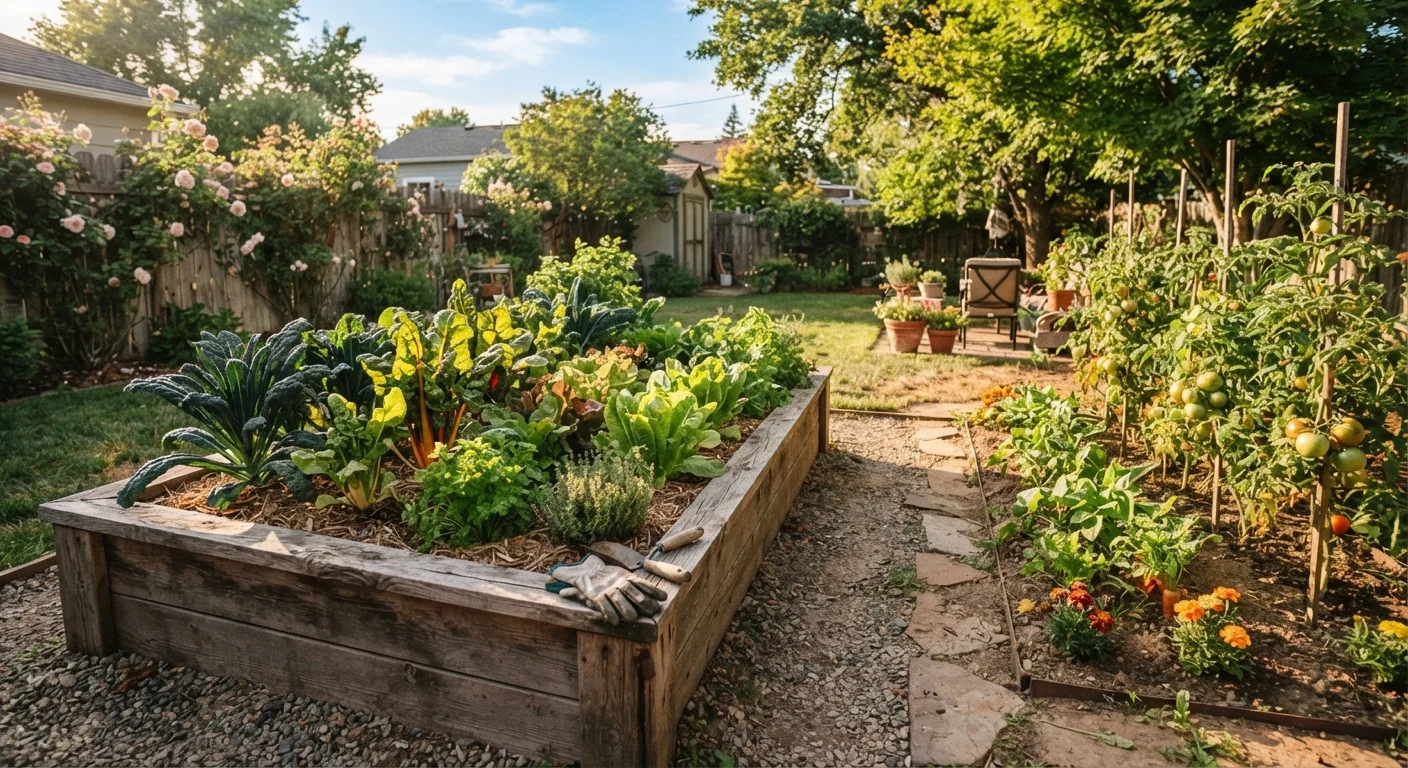
Key Takeaways
- Raised beds cost more to set up but give you direct control over soil quality from the start.
- In-ground planting has almost no startup cost but may require soil amendment work over multiple seasons.
- Raised beds drain faster and warm up earlier in spring, which can extend your growing season.
- In-ground plots suit larger plantings and crops with deep root systems, such as corn or squash.
- Either method can be productive; the deciding factors are your existing soil, budget, and physical comfort.
Option A
Raised beds
The controlled, accessible growing environment.
Best for: Families with poor native soil, limited mobility, or small defined spaces who can invest upfront for easier long-term management.
Option B
In-ground planting
The traditional, low-cost approach to home growing.
Best for: Gardeners with workable native soil, larger planting areas, and a preference for lower startup costs.
If your yard has clay-heavy or compacted soil
Raised beds
Building up from scratch with quality fill lets you skip years of amendment work. You get productive soil immediately rather than waiting for native ground to improve.
If you want to minimize upfront spending
In-ground planting
No materials are needed beyond basic tools and soil amendments. Even adding compost costs far less than purchasing lumber and fill for a raised bed.
If physical comfort during gardening matters
Raised beds
Working at a raised height reduces bending and kneeling, which is a practical advantage for adults with back or joint concerns.
If you plan to grow large-volume crops like corn, melons, or winter squash
In-ground planting
These crops need deep root runs and wide spacing. In-ground beds provide that without the constraint of a frame.
If you want a setup that requires the least seasonal maintenance
Raised beds
Better drainage reduces waterlogging, and contained soil stays looser over time with less compaction from foot traffic or rain.
Startup costs and what each setup actually requires
In-ground planting is close to free to start. If you already own a spade and a garden fork, the main expense is any soil amendment you add, such as bagged compost or a load of aged manure. For many families, that runs $30 to $80 for a modest plot, depending on how much amendment the soil needs.
Raised beds carry real material costs. A single 4x8-foot wooden frame built from untreated cedar or pine costs roughly $50 to $150 in lumber, plus fill. A quality raised-bed mix (typically a blend of topsoil, compost, and coarse material) runs $40 to $90 per cubic yard. A 4x8 bed that is 12 inches deep needs about 1.2 cubic yards. Factor in two or three beds and startup costs reach $300 to $600 before you plant a single seed.
That said, raised beds can offset costs over time by reducing weed pressure and water waste. Efficient irrigation is easier to set up in a contained bed, which matters in drier climates or during summer water restrictions.
| Criterion | Raised beds | In-ground planting |
|---|---|---|
| Startup cost | $300 to $600+ for materials | $30 to $80 for amendments |
| Soil control | Complete from day one | Depends on native soil quality |
| Drainage | Fast; dries out quickly | Slower; retains moisture longer |
| Spring warmup | Earlier by 2 to 4 weeks | Later; soil holds cold longer |
| Physical comfort | Less bending required | Ground-level work throughout |
| Scale and expansion | Limited by frame size and cost | Easy to expand incrementally |
| Weed pressure | Lower with clean fill | Higher initially; improves with time |
| Best crop types | Vegetables, herbs, greens | Large vining crops, perennials, corn |
Soil quality and long-term management
The biggest practical advantage of a raised bed is that you control what goes into it from the start. If your yard has poor drainage, heavy clay, or rocky ground, a raised bed sidesteps those problems entirely. In-ground gardeners with difficult soil face a longer path: improving native ground takes consistent amendment over multiple seasons.
That process is worth understanding before you write it off. Soil signals like waterlogging, crust formation, and stunted roots often point to fixable problems. Regular compost additions, cover crops, and reduced tilling can transform poor native soil within two to three years, at a fraction of the cost of raised bed fill.
Raised bed soil does require topping up each season since it settles and organic matter breaks down. Budget for one to two inches of compost per bed each spring to maintain structure and fertility.
12 inches
Minimum raised bed depth for most vegetables
Cooperative Extension guidance from multiple U.S. land-grant universities recommends at least 12 inches of loose fill for adequate root development in raised beds.
2 to 3 years
Typical time to improve poor native soil with compost
Soil scientists generally note that consistent organic matter additions over multiple seasons are needed to meaningfully shift clay or compacted soil structure.
4 feet
Standard raised bed width for no-step access
The 4-foot width is a widely used guideline because most adults can reach the center from either side without stepping into the bed and compacting the soil.
Space, layout, and what each method handles well
Raised beds work well in defined, compact areas. The standard 4-foot width lets a person reach the center from either side without stepping in, which keeps soil loose. That matters more than it sounds: compacted soil reduces root penetration and water infiltration.
In-ground plots handle scale better. If your goal is growing corn, winter squash, or sprawling melons, a raised frame becomes a constraint rather than a help. These crops need room to spread and root depth that a 12-inch frame can limit. An in-ground setup also integrates more naturally with a lawn or larger yard, making it easier to expand planting areas year to year without additional construction.
Families with very limited outdoor space have a third option worth knowing about: container gardening on a patio can produce herbs and small vegetables without any ground space at all.
For families who want low-maintenance ground coverage around their beds, comparing gravel, mulch, and ground cover materials can help reduce weeding between planted areas.
Seasonal performance and planting windows
Raised beds warm up faster in spring because the soil mass sits above grade and absorbs heat from all sides. In many regions this extends the usable growing season by two to four weeks at the start of the year, which matters for crops like lettuce, spinach, and peas that prefer cooler soil but need frost-free conditions.
The flip side is that raised beds also dry out faster during summer heat. Watering frequency increases, and without consistent moisture management, plants in raised beds can stress more quickly than those in ground with deeper moisture reserves.
In-ground plots stay cooler and hold moisture longer, which is an advantage in hot climates or during heat waves. They are also more forgiving if you miss a watering day. For perennial plants and shrubs, in-ground soil provides the consistent root environment that supports long-term establishment. Perennials with deep root systems generally perform better in ground than in any contained structure.