

Key Takeaways
- Most effective kid-engagement strategies on travel days cost little or nothing to prepare.
- Spacing out activities and snacks in timed intervals helps prevent boredom spikes on long drives or flights.
- Analog activities like story dice, drawing pads, and audiobooks often outperform screens for sustained engagement.
- Involving kids in simple trip planning before departure reduces complaints and increases buy-in during the journey.
- Packing entertainment in small, accessible bags lets children feel independent and manage their own time.
Why long travel days go sideways (and what actually helps)
The classic family travel meltdown rarely comes from boredom alone. It comes from unpredictability: kids don't know when the next stop is, how much longer the flight is, or whether there's a snack coming. That uncertainty compounds restlessness faster than the hours do.
The families who navigate long travel days without losing their minds tend to do two things: they give kids a loose sense of the schedule, and they layer short activities rather than relying on one long distraction. Neither of those approaches costs money. If you're still working through the logistics of getting out the door in the first place, the family travel planning walkthrough covers the full picture from idea to departure.
What follows are the specific practices that hold up on real travel days, with kids of different ages and temperaments.
The role of analog activities
Screens work, but they carry a ceiling. Battery life runs out, motion sickness kicks in for some kids, and the transition off a device often triggers the exact meltdown parents were trying to avoid. Analog activities don't have those problems.
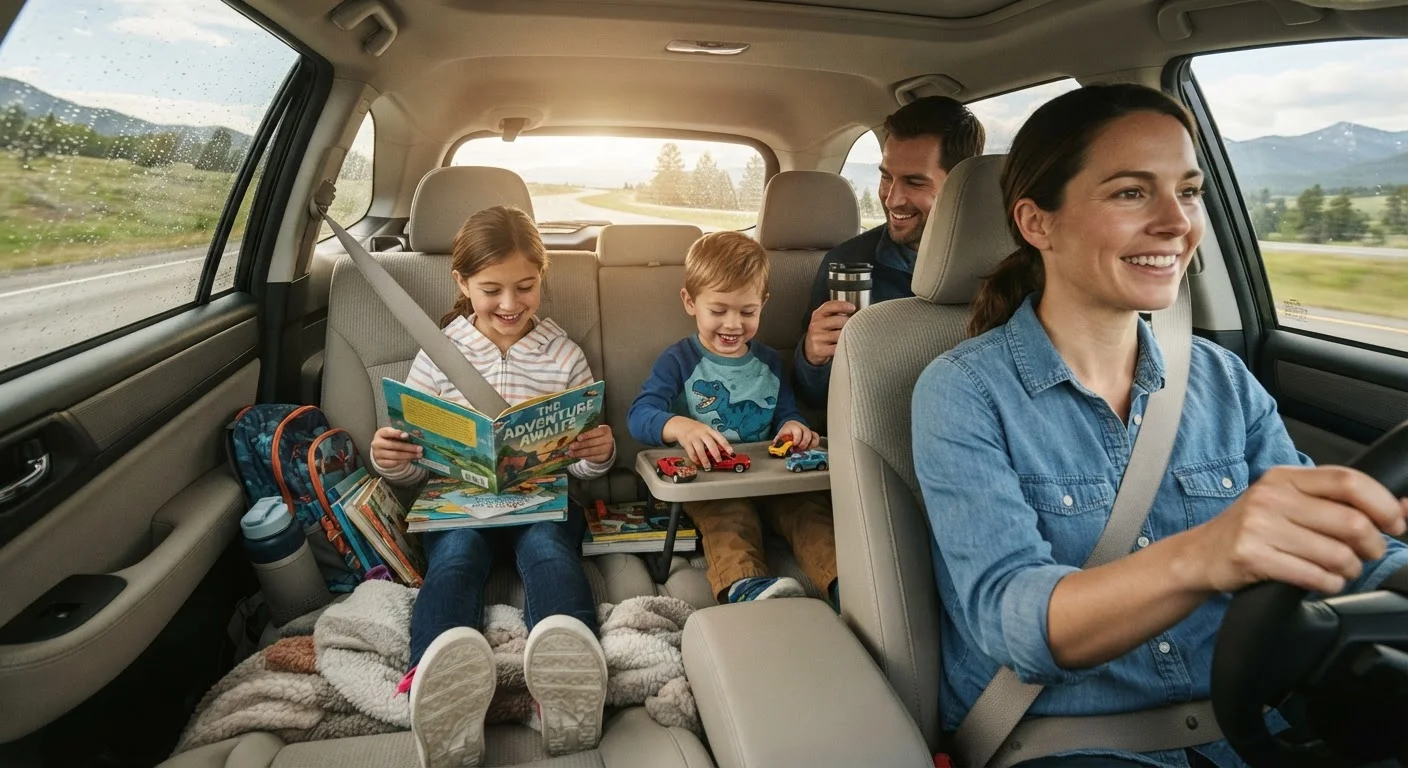
A small spiral notebook and a pack of colored pencils can absorb an hour of a six-year-old's attention. Story dice (small cubes with illustrated faces) generate imaginative play that kids sustain without any adult facilitation. Audiobooks from a library app are free, work on a single charged phone, and let the whole car participate. Window bingo cards, printed at home before departure, turn highway scenery into a game that costs nothing but a few minutes of prep.
The family road trip budget guide includes additional ideas for managing long driving stretches without piling up expenses.
Managing expectations before you leave the driveway
One of the most underused tools for a calm travel day is a pre-trip conversation. When kids know roughly what to expect, including the honest answer to "how long until we get there," they manage waiting better. A simple visual timeline drawn on paper the night before can work for younger children: one circle for home, one for the airport or rest stop, one for the destination.
Giving kids a small role also helps. Let them choose two or three items to pack in their own travel bag. For older kids, assign them a specific job during the trip, such as tracking rest stop locations on a map or keeping a travel journal. These are not elaborate activities. They cost nothing and give children a stake in how the day goes.
Parents who want to think about the activity costs at the destination itself will find the common activity overspending mistakes article worth reading before the trip.
Note: Every child responds differently to travel. Age, temperament, and the specific journey all affect what works. Treat any approach here as a starting point, not a guarantee.
Packing entertainment without spending extra
The instinct to buy new toys or entertainment for a trip is understandable, but it rarely pays off. A toy that's already familiar tends to hold attention better than a novel one, because the child already knows what it can do. New items often get examined for ten minutes and discarded.
A better approach: rotate items the child already owns. Pull out a puzzle, a small figurine set, or a card game that hasn't been played recently and pack that instead. The mild novelty of "oh, I forgot about this" is often enough.
For downloadable content, most public library systems give cardholders access to audiobooks and e-books at no cost through apps. Download a few titles before leaving home. This applies to kids' content as well as adult audiobooks, which keep parents sane on long drives too.
Packing all of this without adding a checked bag is its own skill. The packing guide for avoiding checked bag fees has practical methods for keeping the luggage light while still bringing what the family needs.
73%
Families citing boredom as a top travel-day stressor
A 2023 survey by the American Automobile Association found that boredom and restlessness among children ranked among the most common challenges families reported on long car trips.
2 hrs
Recommended interval for physical breaks on road trips
Pediatric travel guidance from major children's health organizations generally recommends stopping every one to two hours on long drives to allow children to move and stretch.