

Lifestyle

Before You Declutter: A Room-by-Room Checklist for Sorting Family Belongings

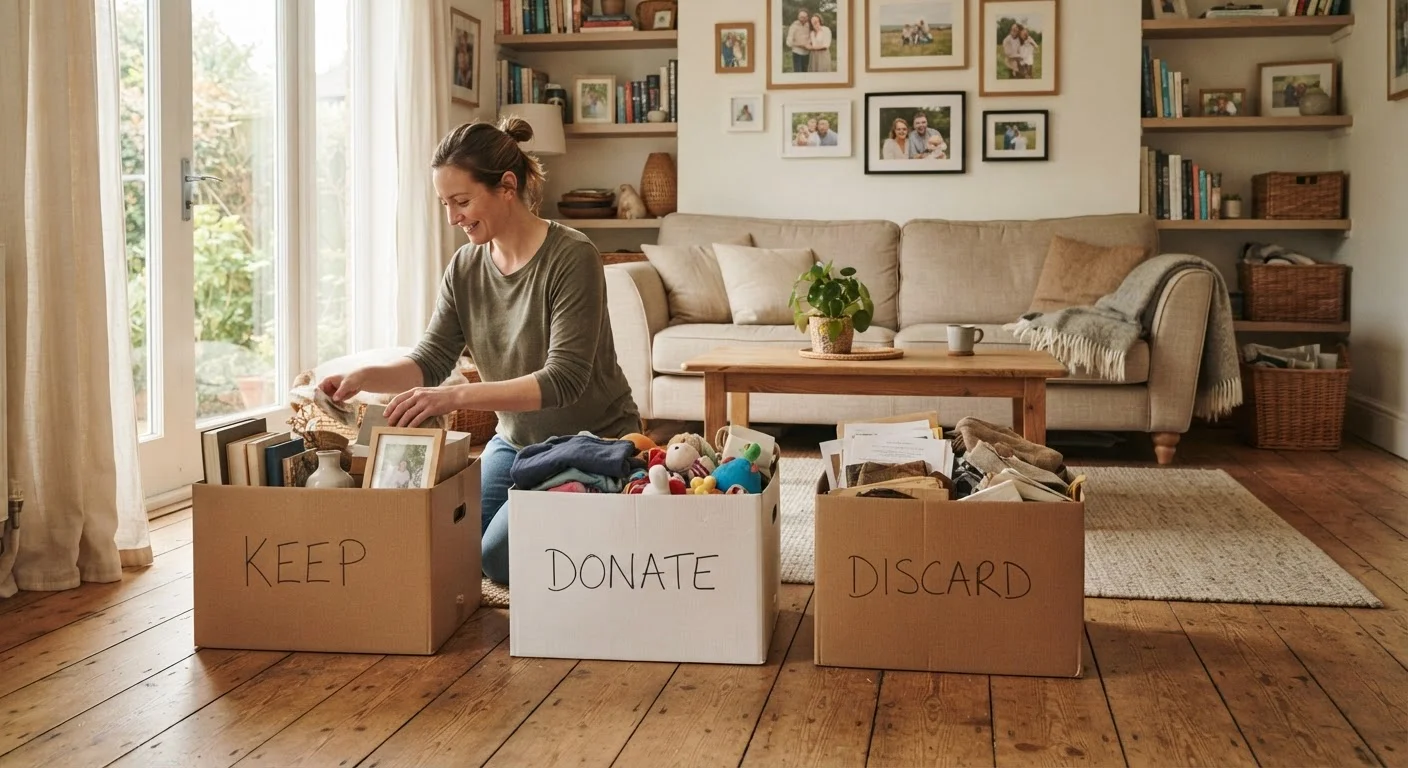
Labeled cardboard boxes for sorting belongings in a tidy family living room

Key Takeaways

  • Sorting belongings into four categories (keep, donate, sell, discard) before decluttering prevents second-guessing.
  • Tackling one room at a time avoids the overwhelm that stalls most decluttering efforts.
  • Items you donate or sell can offset household costs or fund a savings goal.
  • A few simple supplies set up in advance make the whole process move faster.
  • Children handle the process better when they are included rather than bypassed.
30–60 min

Summary

26 items · 30 to 60 minutes per room

Why a checklist changes everything

Most decluttering attempts fail in the middle: bags half-filled, piles migrating from one room to another, and family members overruling each other with no agreed framework. A room-by-room checklist gives everyone the same criteria upfront, so decisions happen once instead of five times.

There is also a financial side worth noting. Donating usable items can generate tax deduction documentation (consult a tax professional about your situation), and selling duplicates or outgrown gear can put real cash back in the household budget. If you are working toward financial goals, see the overview of common budgeting frameworks for ideas on where to direct those proceeds.

Before you touch a single drawer, gather your supplies and set a realistic scope. Decluttering the whole house in a weekend is possible for some families and exhausting for others. One room per session is a pace most households can actually sustain.

Required

Labeled boxes or large bags

One set per room for the four sorting categories: keep, donate, sell, and discard.

Required

Permanent marker

Label boxes and storage bins clearly so sorted items do not get mixed back together.

Optional

Phone or camera

Photograph sellable items and document donations for your own records.

Optional

Timer

Keep each sorting session to a manageable length and prevent decision fatigue.

Required

Municipality waste management info

Confirm local drop-off locations for electronics, batteries, paint, and other items that cannot go in household trash.

How to use this checklist

Each room below has its own group of items. For every object you pick up, assign it to one of four categories: keep, donate, sell, or discard. Have a labeled box or bag for each category in the room before you start. Do not create a fifth category called "maybe" as it becomes a holding pen that never empties.

Involve children in age-appropriate decisions about their own belongings. Giving kids a voice reduces resistance and teaches a practical skill. For items with sentimental weight, set a physical limit (one storage bin per person, for example) rather than leaving the boundary open-ended.

Medication and hazardous item disposal

Do not put expired medications in the household trash or flush them. Many pharmacies and community health organizations run take-back programs for safe disposal. Similarly, paints, solvents, batteries, and electronics require designated drop-off rather than standard curbside collection. Check your city or county waste management website before your declutter session so you have a plan ready.

Before you start

Gather four labeled boxes or bags per room (keep, donate, sell, discard) before touching anything. Must
Set a timer for each session to prevent decision fatigue from dragging the process past two hours. Should
Agree with all household members on the four-category system before starting. Must
Take a phone photo of each room before sorting so you can see the before-and-after difference. Nice to have

Kitchen

Pull out every item from cabinets and countertops and check for duplicates, broken pieces, or appliances unused in the past year. Must
Check expiration dates on pantry staples and discard anything past date or unlikely to be used. Must
Assess food storage containers: discard any without a matching lid. Should
Donate extra sets of dishes, mugs, or flatware that exceed what your household realistically uses. Should

Living room and common areas

Sort through media (books, DVDs, games) and set aside anything the family has not used in two or more years. Should
Identify decorative items that no longer reflect the family's taste or serve a practical purpose. Nice to have
Collect stray cables, chargers, and electronics and confirm each one is still in use or compatible with current devices. Should
Check throw pillows, blankets, and soft furnishings for wear and donate extras in good condition. Nice to have

Bedrooms

Empty the closet fully and sort clothing by whether it fits, has been worn in the past year, and is in good condition. Must
Sort children's clothing by current size and set aside outgrown items for donation or consignment. Must
Check under beds and in storage ottomans for items that have been forgotten rather than intentionally stored. Should
Let each child choose a set number of toys or stuffed animals to keep, donate, or sell. Should

Bathrooms

Discard expired medications through a proper take-back program or your pharmacy's disposal service, not the household trash or toilet. Must
Toss opened personal care products (lotions, serums, sunscreens) that are past their use-by date or more than 12 months old. Must
Donate unopened, unexpired products that the family no longer uses to a local shelter if they accept them. Nice to have

Garage, basement, or storage areas

Identify tools or equipment that duplicates something else you own and set the extra aside for donation or sale. Should
Check seasonal gear (holiday decorations, camping equipment, sports gear) and discard or donate anything broken or no longer needed. Should
Separate any hazardous materials (old paint, solvents, batteries) for proper disposal at a designated local facility. Must
Label storage bins clearly after sorting so future retrieval does not require emptying every box. Should

Final review

Load donation boxes into the car the same day sorting finishes to prevent items from drifting back into the house. Must
Photograph sellable items and list them within 48 hours while motivation is still fresh. Should
Schedule hazardous waste or electronics drop-off before adding those items to any storage area. Must

After the sort: what to do with each pile

Once every room is sorted, act on each pile within 48 hours. Donation boxes left by the door for weeks tend to get raided. Items you plan to sell can go through a local consignment shop, a community swap group, or an online marketplace: the right channel depends on the item and how much time you want to invest in the process.

Discard piles may include items that need special handling. Electronics, batteries, paint, and certain cleaning products often require drop-off at designated collection sites rather than standard curbside pickup. Check your municipality's waste management website for local options.

If traveling light is also on your mind, the habits you build here translate directly to packing. A decluttered home makes it easier to find what you actually need, and our guide to packing without checked bag fees shows how the same keep-or-leave thinking applies to family trips.

Lifestyle Editorial Team is the collective byline for our editorial team and contributor network. Articles published under this byline or an editorial pen name are researched, written, and reviewed according to our editorial standards for clarity, consistency, and independence before publication.

View all articles by Lifestyle Editorial Team →
Disclaimer: The content provided on our blog site traverses numerous categories, offering readers valuable and practical information. Readers can use the editorial team’s research and data to gain more insights into their topics of interest. However, they are requested not to treat the articles as conclusive. The website team cannot be held responsible for differences in data or inaccuracies found across other platforms. Please also note that the site might also miss out on various schemes and offers available that the readers may find more beneficial than the ones we cover.