
DIY Insulation vs. Hiring a Professional: What Families Should Know Before Deciding

Key Takeaways
- Fiberglass batts and blown-in attic insulation are the most DIY-accessible types for most families.
- Spray foam, vapor barriers in crawl spaces, and exterior rigid board work often require permits and professional installation.
- DIY insulation can reduce material and labor costs, but mistakes in air sealing can reduce effectiveness significantly.
- Always check local building codes before starting any insulation project, regardless of scope.
- Hiring a professional makes financial sense when the work involves hazardous materials, confined spaces, or complex building envelope details.
Lower cost on straightforward projects
Labor can represent 30 to 50 percent of a professional estimate for basic attic work. Handling that work yourself reduces the total cost when the job does not require specialized equipment or licensing.
Accessible materials and rental equipment
Fiberglass and mineral wool batts are sold at home improvement stores in standard widths. Blowing machines for cellulose are available at many rental centers, often at low or no cost with a material purchase.
Flexible scheduling and pacing
A DIY approach lets families insulate in stages rather than paying for an entire project at once, which helps when working within a tight household budget.
Good performance when installed correctly
Batt insulation installed at the proper depth, with seams tight and air gaps minimized, can achieve R-values close to rated performance without professional tools.
Permit and code requirements are often overlooked
Many jurisdictions require permits for insulation that affects conditioned space. Missing this step can result in failed inspections, required removal, or complications when selling the home.
Spray foam requires licensed applicators in many states
Closed-cell spray foam involves hazardous isocyanate compounds and precise mixing ratios. Improper application can reduce R-value, cause adhesion failures, or create health risks.
Existing insulation may contain hazardous materials
Insulation installed before the late 1970s may include asbestos. Disturbing it without professional testing and containment procedures is a health and legal risk.
Moisture and vapor errors are costly to fix
Incorrect vapor barrier placement in crawl spaces or basements can shift moisture problems rather than resolve them, leading to mold or structural damage over time.
Air sealing gaps reduce energy performance
Insulation alone does not stop air movement. Without proper air sealing around penetrations and framing, much of the thermal benefit is lost regardless of the R-value installed.
Our Verdict
DIY insulation is a realistic option for straightforward jobs like attic batts or basement rim joists, provided the homeowner follows safety guidelines and verifies local code requirements. For spray foam applications, vapor control in crawl spaces, or any project involving old insulation that may contain hazardous materials, professional installation is the more prudent path. Cost savings are real for simple projects, but the risk of improper installation reducing energy performance or triggering code issues is also real.
Families comfortable with basic construction tasks who have a straightforward attic or wall cavity project and have confirmed no permits or hazardous materials are involved.
How to read the decision before you start
The first question is not which approach costs less. It is whether the project type allows DIY in the first place. Building codes in most U.S. jurisdictions require permits for insulation work that affects the thermal or vapor control layer of a conditioned space. In some states, spray polyurethane foam must be installed by a licensed applicator. Starting without that knowledge can mean failed inspections, required tear-outs, and costs that exceed what a contractor would have charged originally.
The type of insulation also determines complexity. Fiberglass batts and mineral wool batts are cut-and-place materials that a careful homeowner can handle with basic tools, protective gear, and good instructions. Spray foam, whether open-cell or closed-cell, involves chemicals that off-gas during application, require precise mixing ratios, and can cause permanent adhesion problems if applied incorrectly. Blown-in cellulose sits in the middle: equipment is available for rent, but proper depth, density, and coverage require more attention than batts.
Before picking up any tools, check with your local building department about permit requirements and contact your utility company about rebate programs. Many utilities offer rebates for insulation upgrades, and some require professional installation to qualify.
The case for doing it yourself
Lower cost on straightforward projects
Labor can represent 30 to 50 percent of a professional estimate for basic attic work. Handling that work yourself reduces the total cost when the job does not require specialized equipment or licensing.
Accessible materials and rental equipment
Fiberglass and mineral wool batts are sold at home improvement stores in standard widths. Blowing machines for cellulose are available at many rental centers, often at low or no cost with a material purchase.
Flexible scheduling and pacing
A DIY approach lets families insulate in stages rather than paying for an entire project at once, which helps when working within a tight household budget.
Good performance when installed correctly
Batt insulation installed at the proper depth, with seams tight and air gaps minimized, can achieve R-values close to rated performance without professional tools.
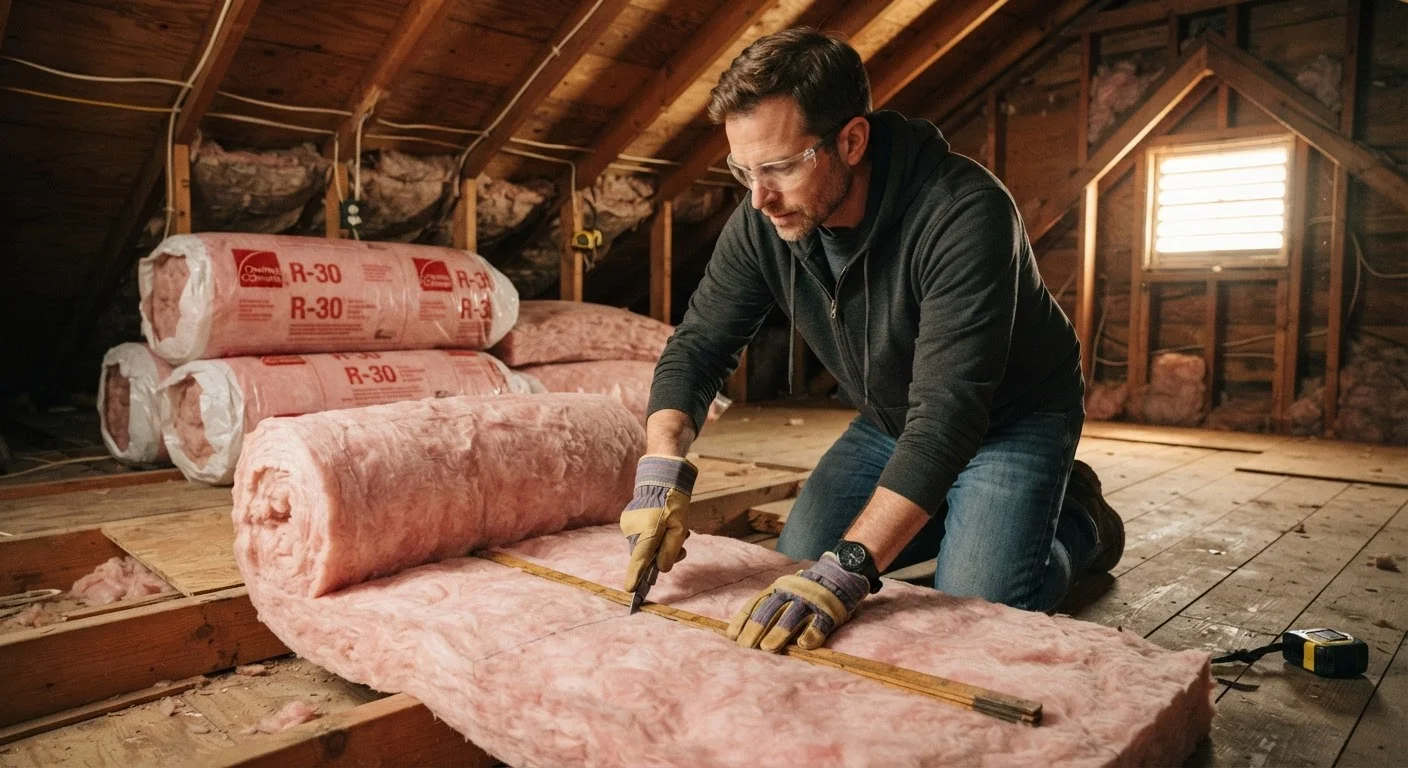
Attic floors are the most DIY-accessible location. The space is open, fiberglass batts fit between standard joist spacing, and the work does not require cutting into finished surfaces. Rim joists in unfinished basements are similarly approachable. A homeowner who air-seals first with caulk or canned foam and then installs cut-to-fit rigid foam or batt insulation can achieve a meaningful improvement in a weekend.
Cost differences are measurable. Labor typically accounts for 30 to 50 percent of a professional insulation estimate for straightforward attic work, so supplying that labor yourself reduces the total outlay. Materials are widely available, and most rental centers carry blowing machines for cellulose at no charge with a minimum material purchase.
DIY also allows the homeowner to control timing and scope. A family on a tight schedule can insulate one section of the attic at a time rather than committing to a single contractor visit that empties savings in one transaction. See how to budget for home maintenance projects to think through how insulation fits into a larger upkeep plan.
Where professional installation makes more sense
Permit and code requirements are often overlooked
Many jurisdictions require permits for insulation that affects conditioned space. Missing this step can result in failed inspections, required removal, or complications when selling the home.
Spray foam requires licensed applicators in many states
Closed-cell spray foam involves hazardous isocyanate compounds and precise mixing ratios. Improper application can reduce R-value, cause adhesion failures, or create health risks.
Existing insulation may contain hazardous materials
Insulation installed before the late 1970s may include asbestos. Disturbing it without professional testing and containment procedures is a health and legal risk.
Moisture and vapor errors are costly to fix
Incorrect vapor barrier placement in crawl spaces or basements can shift moisture problems rather than resolve them, leading to mold or structural damage over time.
Air sealing gaps reduce energy performance
Insulation alone does not stop air movement. Without proper air sealing around penetrations and framing, much of the thermal benefit is lost regardless of the R-value installed.
Spray foam projects are the clearest case for hiring a professional. Closed-cell spray foam involves isocyanate compounds that are respiratory hazards during application. Proper personal protective equipment, ventilation, and cure times are non-negotiable. An incorrectly mixed batch can remain tacky, lose R-value, or cause structural problems in enclosed cavities. Most local codes require this work to be done by certified applicators, and the work generally needs inspection.
Crawl space encapsulation involving vapor barriers, drainage, and conditioned-space conversion is another area where professional assessment matters. Moisture management in a crawl space involves interactions between soil conditions, the foundation wall, humidity levels, and the home's HVAC system. An error in vapor control can move a moisture problem rather than solve it.
Any project that requires removing existing insulation also warrants a professional evaluation before work begins. Insulation installed before the late 1970s may contain asbestos or other hazardous materials. Disturbing it without proper testing and containment is a health and legal risk. A certified inspector can test samples and advise on safe removal procedures.
When to test before you touch
If your home was built before 1980 and has existing insulation in place, testing for asbestos is a prudent first step before any removal or disturbance. Asbestos testing kits are available, but the safer approach is to hire a certified inspector who can take samples and advise on abatement options. Do not rely on visual inspection alone: asbestos-containing insulation does not look distinctive to untrained eyes.
Safety steps that apply to every DIY insulation project
Regardless of insulation type, a few precautions apply across all DIY work. Fiberglass and mineral wool fibers are respiratory irritants. An N95 respirator (rated for particulates), safety glasses, long sleeves, and gloves are required gear, not optional. Work in sections and take breaks in fresh air.
Attic work carries heat stress risk in warm months. Attic temperatures can exceed 130 degrees Fahrenheit on summer afternoons. Schedule this work in the early morning or on cooler days, bring water, and have someone aware of your location.
Electrical junction boxes and recessed light fixtures require clearance or insulation-contact-rated covers before batts are placed over them. Covering standard fixtures with insulation is a fire hazard. Check fixture ratings stamped on the housing before proceeding. If the attic contains knob-and-tube wiring, consult a licensed electrician before adding any insulation above it.
15%
Typical home energy loss through the attic
The U.S. Department of Energy estimates that inadequate attic insulation and air sealing account for a significant share of heating and cooling loss in American homes.
30-50%
Labor share of a basic insulation estimate
For straightforward attic batt installation, labor commonly represents 30 to 50 percent of the contractor's total quote, based on general contractor pricing structures.